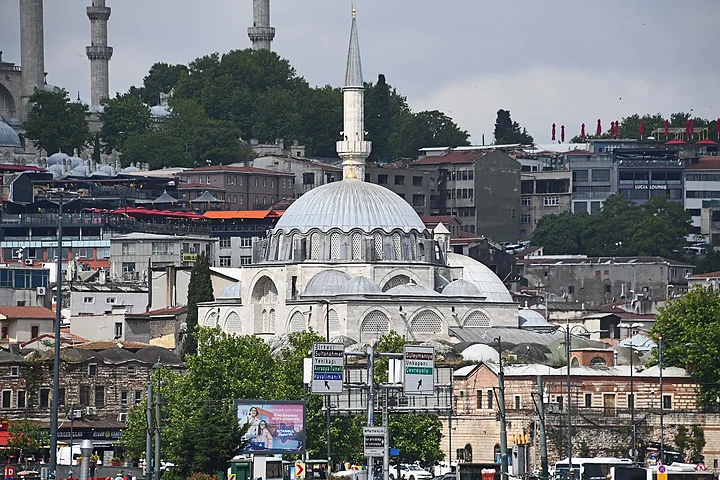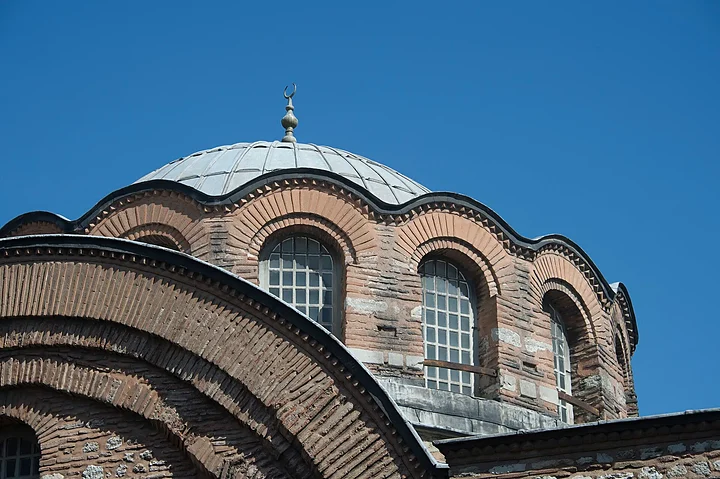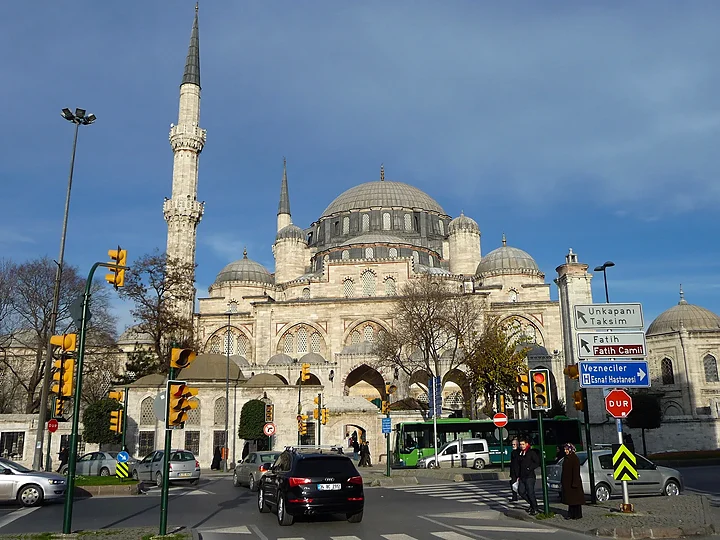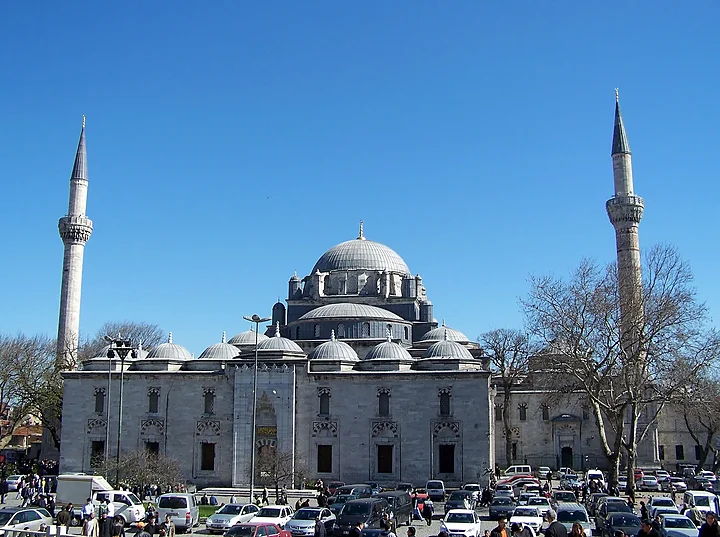
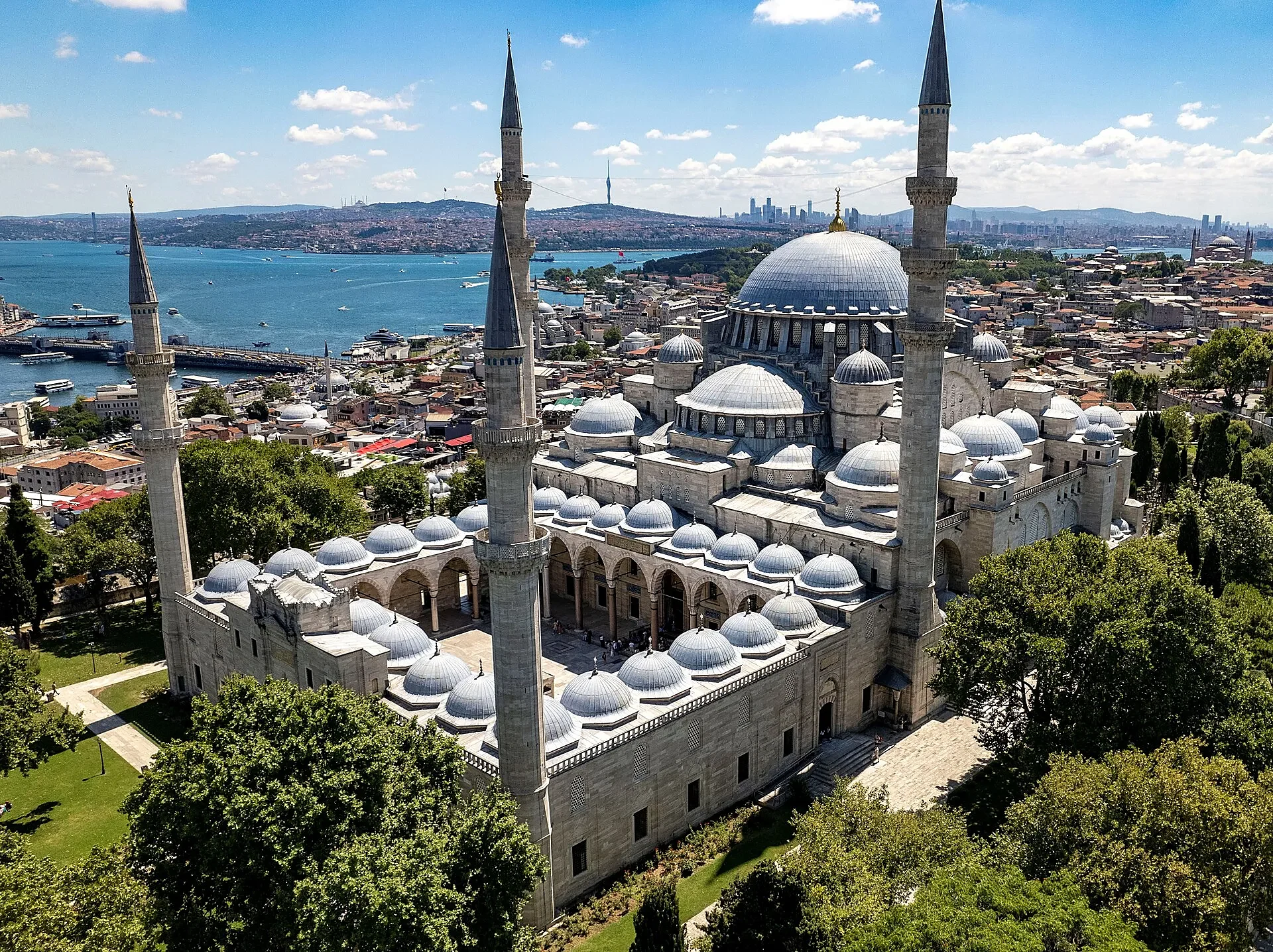
Sulaymoniya Masjidi (turkcha: Süleymaniye Camii) — Turkiyaning Istanbul shahridagi eng yirik masjidlardan biri (Sulton Ahmad masjididan keyin). Masjid podshoh Sulaymon I Qonuniy tashabbusi bilan yetti yil davomida qurilgan.
Masjidning 4 ta minora va 10 ta ayvoni bor. Bu narsalar podshohning Usmonlilar imperiyasi tomonidan Konstantinopol shahri egallanganidan keyingi toʻrtinchi va imperiyaning oʻninchi podshoh ekanligini bildiradi.
Мечеть Сулеймание́ (тур. Süleymaniye Camii) — вторая мечеть Стамбула по значению (после Голубой мечети, или мечети Султана Ахмета) и по размерам (после мечети Чамлыджа , открытой в 2019 году). Вмещает более 5000 верующих. Расположена в старой части города, в районе Вефа.
The Süleymaniye Mosque (Turkish: Süleymaniye Camii, pronounced [sylejˈmaːnije]) is an Ottoman imperial mosque located on the Third Hill of Istanbul, Turkey. The mosque was commissioned by Suleiman the Magnificent (r. 1520–1566) and designed by the imperial architect Mimar Sinan. An inscription specifies the foundation date as 1550 and the inauguration date as 1557, although work on the complex probably continued for a few years after this.
The Süleymaniye Mosque is one of the best-known sights of Istanbul, and from its location on the Third Hill, it commands an extensive view of the city around the Golden Horn.
Die Süleymaniye-Moschee (türkisch Süleymaniye Camii) ist eine der großen Moscheen in İstanbul. Sie wurde im Auftrag von Sultan Süleyman dem Prächtigen in einer sehr kurzen Bauzeit zwischen den Jahren 1550 und 1557 erbaut und ist ein wichtiges Werk des Architekten Sinan.
La mosquée Süleymaniye ou mosquée de Soliman (en turc Süleymaniye Camii) est une mosquée impériale ottomane d'Istanbul, conçue par l'architecte Sinan pour le sultan Soliman le Magnifique et construite de 1550 à 1557.
La mosquée Süleymaniye et son complexe représentent une organisation urbaine étendue dans une vaste zone comprenant une école coranique (darülkurra), un hôpital, un bain public (hamam), un hospice, six collèges de théologie, des soupes populaires, des magasins, et les mausolées (türbe) du sultan Soliman et de son épouse Roxelane (Hürrem Sultan).
Cet édifice est situé sur l'une des collines d'Istanbul donnant sur la Corne d'or. La construction de la mosquée de Süleymaniye, à laquelle de nombreux artistes de l'époque (comme Ahmet Karahisar et son élève Hasan Çelebi pour les calligraphies) ont contribué, a été réalisée en tenant compte aussi bien de l'aspect global que des détails.
La mezquita de Solimán o mezquita de Süleymaniye (en turco: Süleymaniye Camii) es una mezquita imperial otomana situada en la tercera colina de Estambul, Turquía. Hasta el año 2019 era la más grande de la ciudad, siendo sucedida por la mezquita de Çamlıca; aun así es una de las panorámicas más conocidas de la ciudad.
Süleymaniye Camii, İstanbul'un üçüncü tepesi üzerinde yer alan ve Osmanlı döneminden kalan bir camidir. Kanûnî Sultan Süleyman'ın (h. 1520-1566) emriyle inşa edilen cami, imparatorluğun baş mimarı Mimar Sinan tarafından tasarlanmıştır. Bir yazıtta, yapının temelinin 1550'de atıldığı ve 1557'de açılışının yapıldığı belirtilmektedir; ancak külliyenin inşaatı muhtemelen bu tarihten birkaç yıl sonrasına kadar sürmüştür.
苏莱曼尼耶清真寺(土耳其語:Süleymaniye Camii)是土耳其伊斯坦布尔市内的数座大清真寺之一。它是由苏莱曼一世下令从1550年至1557年在极短的时间内建成的,是建筑师科查·米馬爾·希南最重要的作品。其包括清真寺在内的宏伟的建筑群既有城市建筑,也有国家性的意义,与法齊赫清真寺拥有同样的重要性。
整个庫里耶建筑群建在陡峭的第三山丘上,使用了出奇的建筑方案将山丘和周围的街巷结合到一起。
Manba: Vikipediya – “Sulaymoniya masjidi” · CC BY-SA 4.0
Boshqa tillarda o‘qish: · · · · · · ·