Bu matn hozircha boshqa tilda mavjud.
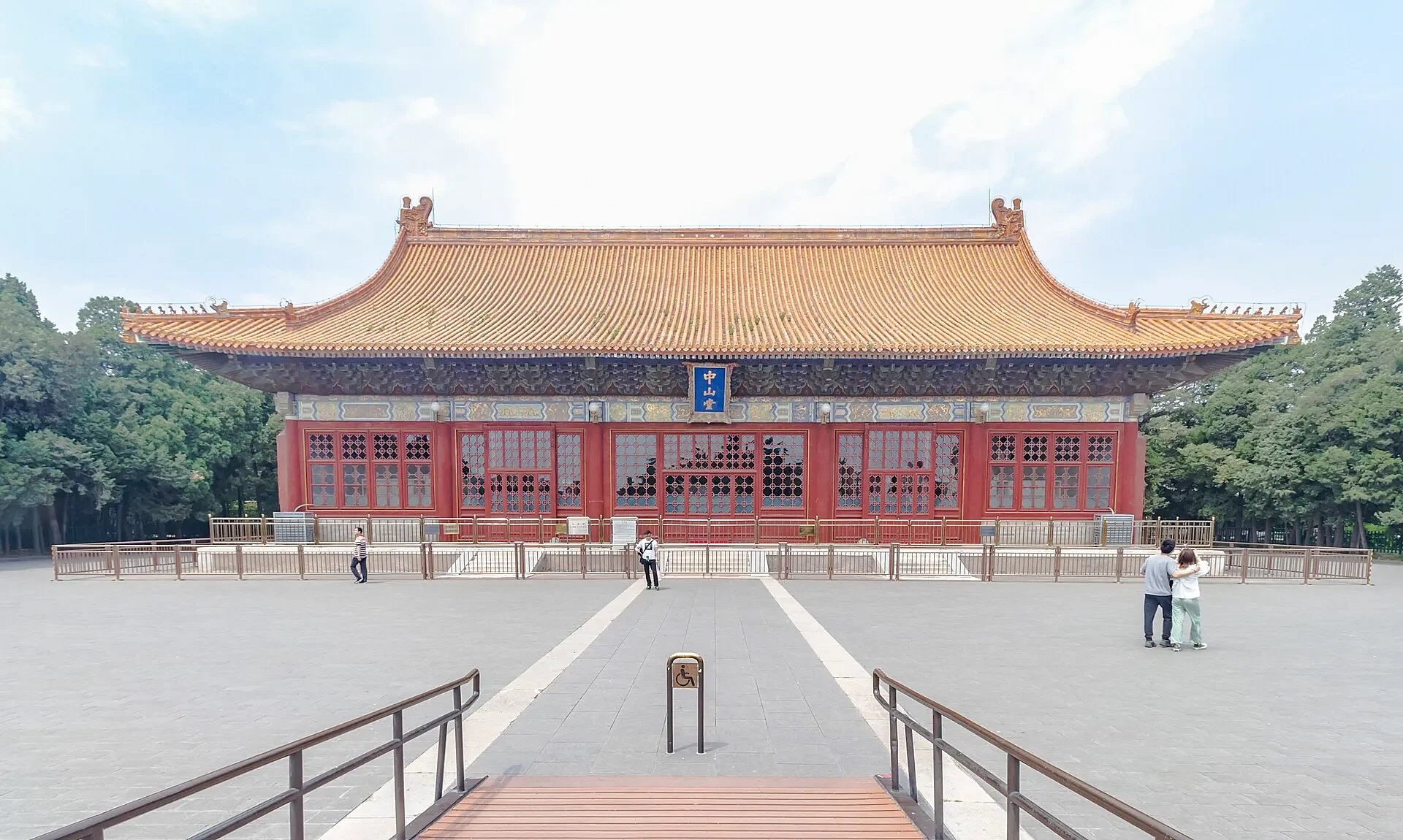
The Zhongshan Park (simplified Chinese: 中山公园; traditional Chinese: 中山公園) was a former imperial altar and now a public park that lies just southwest of the Forbidden City in the Imperial City, Beijing.
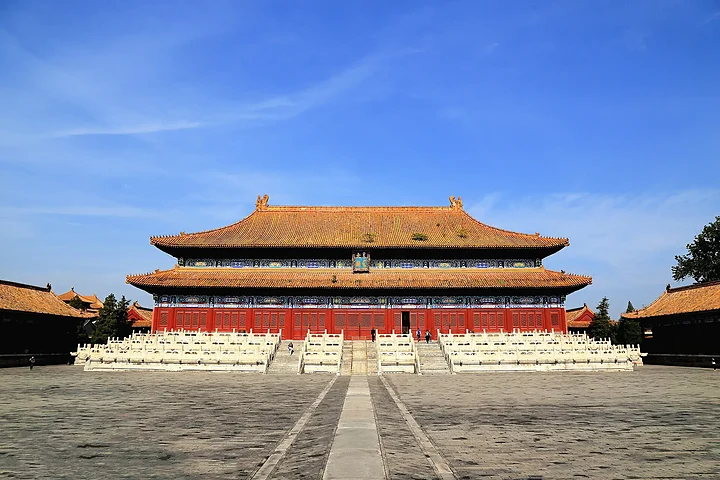
Of all the gardens and parks surrounding the Forbidden City, such as the Beihai and Jingshan, Zhongshan is arguably the most centrally located of them all. The Zhongshan Park houses numerous pavilions, gardens, and imperial temples such as the Altar of Earth and Harvests or Altar of Land and Grain in some translations (Shejitan, 社稷坛), which was built in 1421 by the Yongle Emperor, and it symmetrically opposite the Imperial Ancestral Temple, and it's where the emperors of Ming and Qing dynasties made offerings to the gods of earth and agriculture. The altar consists of a square terrace in the centre of the park.
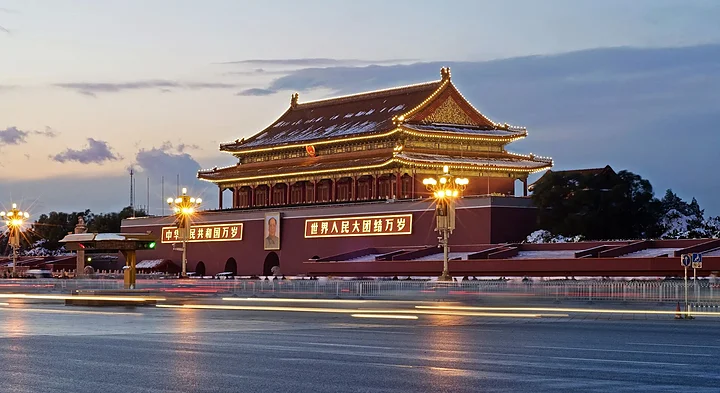
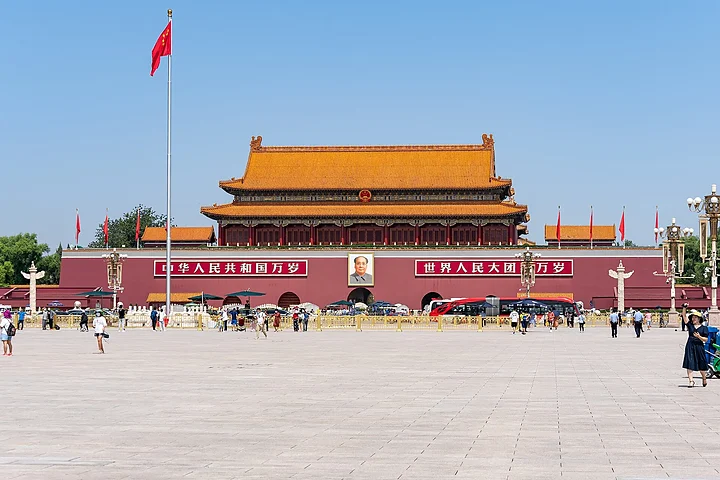
Der Zhongshan-Park (chinesisch 中山公园, Pinyin Zhōngshān gōngyuán) ist ein ehemaliger kaiserlicher Park südlich der Verbotenen Stadt, nordwestlich des Tian'anmen im Zentrum von Peking. Seinen heutigen Namen erhielt er 1928 zu Ehren von Sun Yat-sen (Sun Zhongshan).
In dem Video für den bekannten Feature Song Beijing huanying ni (chinesisch 北京欢迎你, Pinyin Běijīng huānyíng nǐ – „Peking heißt Dich willkommen!“) für den 100-Tage-Countdown der Olympischen Sommerspiele 2008 in Peking ist die Sängerin Karen Mok (莫文蔚) aus Hongkong dort am Erntealtar (Shejitan 社稷坛) mit Erde in fünf Farben (wusetu 五色土) zu sehen.
Der Erntealtar steht seit 1988 auf der Liste der Denkmäler der Volksrepublik China (3-81).
Le parc Zhongshan est un ancien parc impérial au sud de la Cité interdite, situé au nord-ouest de Tian'anmen, dans le centre de Pékin. Son nom actuel lui a été donné en 1928, en l'honneur de Sun Yat Sen (Sun Zhongshan en mandarin).
El parque Zhongshan de Pekín se sitúa tras la Puerta de Tiananmen y como otros parques chinos llamados Zhongshan, está bautizado en honor a Sun Yat-sen, padre de la China moderna. Originalmente el parque era un altar dedicado a los dioses de la tierra y del grano.
Está el Parque Zhongshan entre la Plaza de Tiananmen y la Ciudad Prohibida abarcando unas 24 hectáreas. Donde el actual parque se encontraba, hace unos mil años durante las dinastías Liao y Jin (9l6-l234); el Xingguosi, el Templo Nacional del Renacimiento, entonces en la parte noreste de Yanjing (la actual Pekín). Deste apenas sobrevive un altar policromado dedicado a los dioses de la tierra y algún árbol.
Durante el reinado del Emperador Yongle (1403-1424) se erigieron el Templo Imperial Ancestral (Taimiao) y en 1421, el Altar de la Tierra y el Grano (Shejitan).
En 1914 se convirtió en el parque principal y en l928 se le dio el nombre actual. Desde l949 se ha ido alterando con actividades de recreo y replantaciones.
北京中山公园位于北京市中心紫禁城南面,天安门西侧,于故宫一墙之隔。它原是明清两代的社稷坛,与太庙(今劳动人民文化宫)一起沿袭周代以来“左祖右社”的礼制建造。中山公园现占地23万平方米,是一座纪念性的古典坛庙园林。
Manba: Vikipediya – “Zhongshan Park (Beijing)” · CC BY-SA 4.0
Boshqa tillarda o‘qish: · · · ·