Bu matn hozircha boshqa tilda mavjud.
The Imperial Ancestral Temple, or Taimiao (simplified Chinese: 太庙; traditional Chinese: 太廟; pinyin: Tàimiào) of Beijing, is a historic site in the Imperial City, just outside the Forbidden City, where during both the Ming and Qing dynasties, sacrificial ceremonies were held on the most important festival occasions in honor of the imperial family's ancestors.
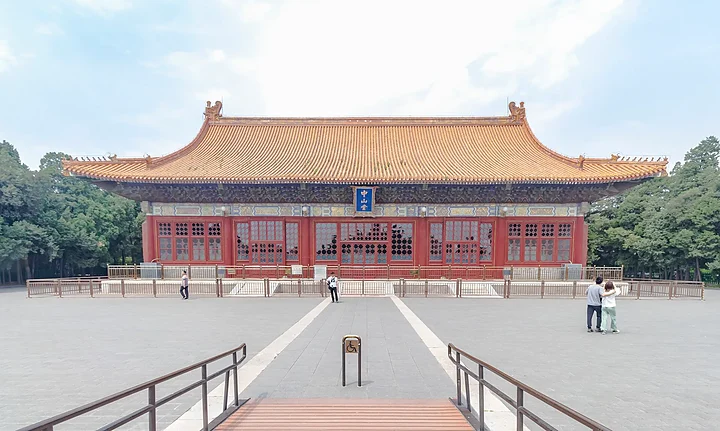
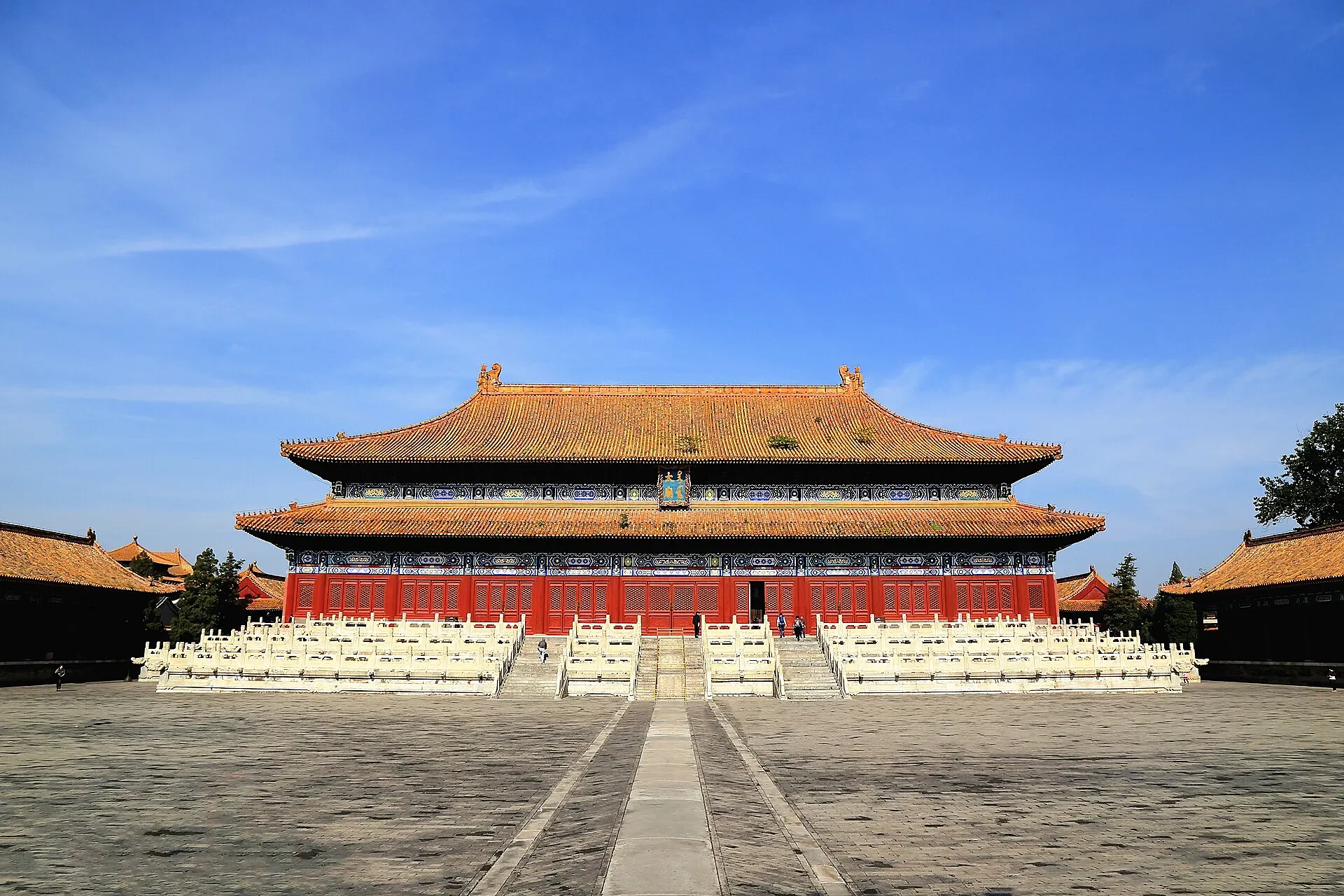
The temple, which resembles the Forbidden City's ground plan, is a cluster of buildings in three large courtyards separated by walls. The main hall inside the temple is the Hall for Worship of Ancestors, which is one of only four buildings in Beijing to stand on a three-tiered platform, a hint that it was the most sacred site in imperial Beijing. It contains seats and beds for the tablets of emperors and empresses, as well as incense burners and offerings. On the occasion of large-scale ceremonies for worship of ancestors, the emperors would come here to participate.
Der Kaiserliche Ahnentempel (太庙, Tàimiào, auch 明堂, Míngtáng genannt) ist eine historische Stätte aus der Zeit der Ming- und der Qing-Dynastie in Peking. Sie befindet sich in unmittelbarer Nachbarschaft der Verbotenen Stadt östlich des Tian’anmen-Tores. In dem Tempel opferten die Kaiser ihren Ahnen. Die Anlage umfasst Vorder-, Mittel- und Hinterhalle sowie weitere Nebenhallen zu beiden Seiten. 1924 wurde daraus der Friedenspark (Heping gongyuan). Seit 1950 trägt die Anlage den Namen Pekinger Kulturpalast der Werktätigen.
Der kaiserliche Ahnentempel steht seit 1988 auf der Liste der Denkmäler der Volksrepublik China (3-80).
Le temple des ancêtres impériaux de Pékin (chinois : 北京太庙 ; pinyin : Běijīng tàimiào) est un temple dédié à la famille impériale chinoise. Il est situé près de la Cité interdite à Pékin en République populaire de Chine.
El Templo Imperial Ancestral, Salón Ancestral o Taimiao (en chino tradicional, 太廟; en chino simplificado, 太庙; pinyin, Tàimiào) es un edificio histórico en el centro de Pekín, justo fuera de la Ciudad Prohibida, donde se celebraron ceremonias de sacrificios durante las dinastías Ming y Qing en las fiestas más importantes en honor a los ancestros de la familia imperial.
El templo, que tiene una planta similar a la de la Ciudad Prohibida, es un grupo de edificios distribuidos en torno a tres grandes patios separados por muros. El salón principal del templo es el Salón del Culto de los Antepasados, que es uno de los cuatro edificios de Pekín que se elevan sobre una plataforma de tres niveles, indicio de que era el lugar más sagrado del Pekín imperial. Contiene lápidas de emperadores y emperatrices, así como incensarios y ofrendas. Con motivo de grandes ceremonias para el culto de los ancestros, los emperadores venían aquí para participar en ellas.
太庙(满语:ᡨ᠋ᠠᡳᠮᡳᠶᠣᠣ,穆麟德转写:tai miyoo)位于北京天安门东侧。总面积139,650平方米,平面成南北向长方形,正门为西南侧太庙街门(该门现被一分为二,外部作为商店使用,不能进入),南门于中华民国大陆时期作为公园时开辟,现为太庙主要游人入口。太庙四周有三重围墙。主要建筑为前殿、中殿、后殿三大殿及配殿,南端有琉璃砖门一座、大戟门一座并小戟门东西各一座,两门之间有七座石桥。明、清两代为皇家祖庙。始建于明永乐十八年(1420年),嘉靖、万历和清顺治年间曾多次重修,乾隆元年(1736年)大加修缮,历时四年,乾隆退位前又将三进大殿及配殿全部扩建。
殿宇均为黄琉璃瓦顶,建筑雄伟壮丽。正殿原为九间,清代改为十一间,进深四间,重檐庑殿顶,周围有三重汉白玉须弥座式台基,四周围石护栏。其主要梁柱外包沉香木,其余木构件均为金丝楠木,天花板及柱皆贴赤金花,制作精细。
太庙虽经清代改建,其规则和木石部分,大体保持原构,是北京最完整的明代建筑群之一。太庙以古柏著名,树龄多达数百年。1924年辟为和平公园,1950年5月1日改名为北京市劳动人民文化宫。
2024年7月27日,太庙作为“北京中轴线——中国理想都城秩序的杰作”的组成部分,入选世界遗产。
Manba: Vikipediya – “Imperial Ancestral Temple” · CC BY-SA 4.0
Boshqa tillarda o‘qish: · · · ·