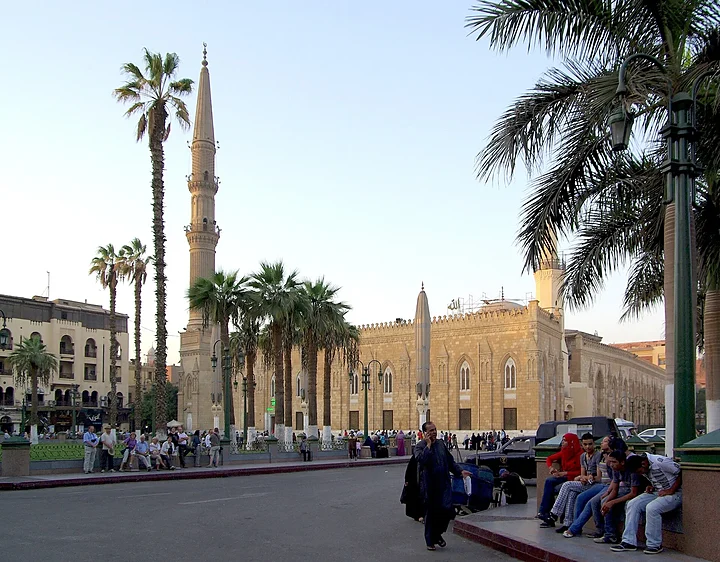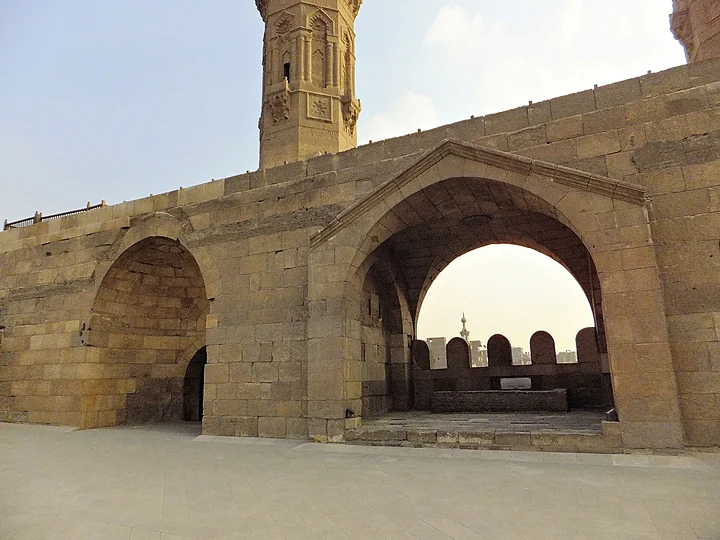
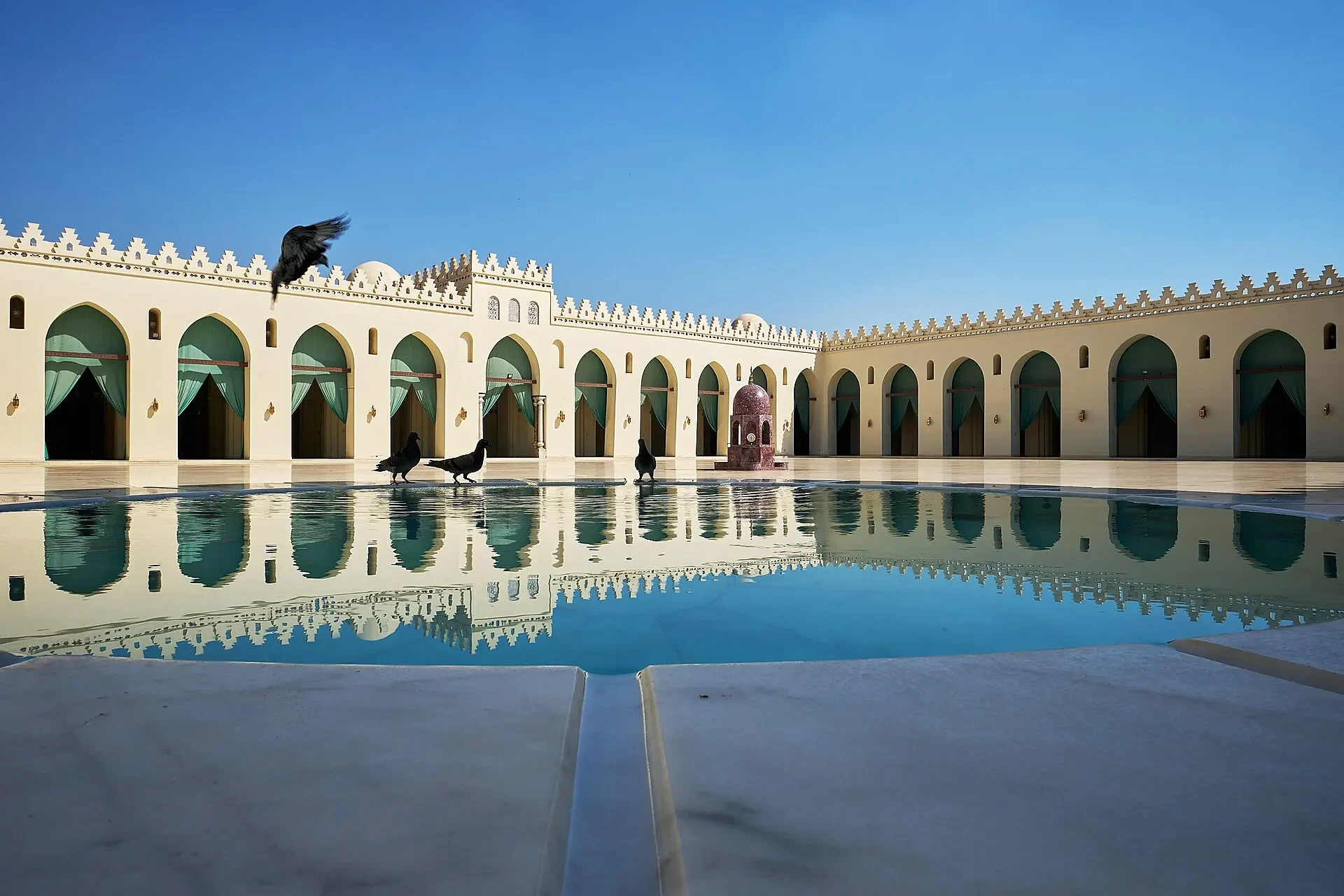
Al-Hakim masjidi (arabcha: مسجد الحاكم), al-Anvar nomi bilan ham tanilgan (arabcha: الانور), Misrning Qohira shahridagi masjiddir. U 6-Fotimiylar xalifasi va 16-Ismoiliy imomi boʻlgan al-Ḥākim bi-Amr Alloh (985–1021) nomi bilan ataladi. Masjid qurilishi dastlab xalifa al-Aziz (al-Mu’izzning oʻgʻli va al-Ḥākimning otasi) tomonidan milodiy 990-yilda boshlangan. U 1013-yilda al-Ḥākim tomonidan yakunlangan va shu bois uning nomi bilan ataladi.
Masjid Islomiy Qohira hududida, al-Muʼizz koʻchasining sharqiy tomonida, Bab al-Futuh (shahar shimoliy darvozasi)dan biroz janubda joylashgan. Qurib bitkazilganidan keyingi asrlar davomida masjid eʼtiborsiz qoldirilgan va boshqa maqsadlarda ishlatilgan, natijada vayrona holatiga kelib qolgan. 1980-yilda masjid Davudiy Bohralar tomonidan keng koʻlamli restavratsiya va qayta qurish ishlaridan oʻtkazildi va yana diniy maqsadlarda foydalanish uchun ochildi.
Мечеть аль-Хакима (араб. الجامع الانور) — мечеть в Каире. Расположена недалеко от ворот Баб аль-Футух. Вторая по величине мечеть эпохи Фатимидов. В разное время мечеть использовалась как тюрьма, конюшня, завод, музей, школа и футбольное поле.
The al-Hakim Mosque (Arabic: مسجد الحاكم, romanized: Masjid al-Ḥākim), also known as al-Anwar (Arabic: الانور, lit. 'the Illuminated'), is a mosque in Cairo, Egypt. It is named after al-Ḥākim bi-Amr Allāh (985–1021), the 6th Fatimid caliph and 16th Ismāʿīlī Imam. Construction of the mosque was originally started by Caliph al-ʿAziz, the son of al-Muʿizz and the father of al-Ḥākim, in 990 CE. It was completed in 1013 by al-Ḥākim, which is why it is named after him.
The mosque is located in Islamic Cairo, on the east side of al-Muʿizz Street, just south of Bab al-Futuh (the northern city gate). In the centuries since its construction, the mosque was often neglected and re-purposed for other functions, eventually falling into ruin. In 1980, a major restoration and reconstruction of the mosque was completed by the Dawoodi Bohras, resulting in its reopening for religious use.
Die al-Hakim-Moschee (arabisch مسجد الحاكم بأمر الله, DMG Masǧid al-Ḥākim bi-Amr Allāh, auch al-Anwar-Moschee) ist eine große Moschee in der ägyptischen Stadt Kairo. Sie ist nach al-Hakim benannt, dem 6. Fatimiden-Kalifen und 16. Ismailiten-Imam der Fatimiden. Es war eine weitere Moschee in Kairo neben der bereits bestehenden al-Azhar-Moschee, dem religiösen Zentrum der Schule der Ismailiten. Hakim war der erste Fatimiden-Herrscher, der in Ägypten geboren wurde.
Zu Zeiten der Kreuzzüge wurde die Moschee als Gefängnis genutzt. Unter Saladin diente die Moschee als Stall, und unter Napoleon als Festung. Nachdem das Bauwerk zuletzt als Schule genutzt worden war, blieb das Gebäude fortan ungenutzt. Ab den 1980er Jahren jedoch wurde die bislang in Ruinen liegende Moschee als Neubau wiedererrichtet, wobei die erhaltenen Teile wie Koraninschriften und Gesimse in den Neubau integriert wurden. Die Wiedererrichtung fand unter der Schirmherrschaft von Syedna Mohammed Burhanuddin aus der Gruppierung der Dawudi Bohras statt, einer ismailitischen Sekte aus Indien.
La mosquée Al-Hakim ( arabe : مسجد الحاكم بأمر الله (Masjid al-Ḥākim bi Amr Allāh)), surnommée al-Anwar (arabe : الانور), est une mosquée historique du vieux Caire, en Égypte. Elle porte le nom d'Al-Hakim bi-Amr Allah (985-1021), le sixième calife fatimide et 16e imam ismaili.
La construction de la mosquée a été commencée par le calife al-'Aziz, fils d'al-Mu'izz et père d'Al-Hakim, en 990 apr. J.-C. Elle fut achevée en 1013 par Al-Hakim, c'est pourquoi elle porte son nom.
La mosquée est située au Caire islamique, du côté est de la rue al-Mu'izz, juste au sud de Bab al-Futuh (la porte nord de la ville). Comme d'autres mosquées du Caire, au cours des siècles qui ont suivi sa construction, le bâtiment a souvent été négligé et réutilisé pour d'autres fonctions, pour finalement tomber en ruine.
En 1980, une importante restauration et reconstruction de la mosquée fut achevée par les Dawoodi Bohras, permettant sa réouverture à un usage religieux.
La Mezquita Al-Hákim, también conocida como Al-Jam‘e al-Anwar (en árabe: الجامع الانور, Mezquita Anwar, literalmente: Mezquita Iluminada) es una importante mezquita situada en El Cairo, Egipto. Se llama así en honor al imán Al-Hákim bi-Amr Allah (985-1021), el sexto califa fatimí, decimosexto imán fatimí/ismailí y el primero nacido en Egipto.
La mezquita fue construida como un recinto por el visir fatimí Ŷawhar al-Siqilli (c. 928–992), pero se incorporó a las fortificaciones construidas por Badr al-Jamali. Consiste en un rectángulo irregular con cuatro soportales que rodean el patio. Un elemento inusual es la entrada monumental con su pórtico de piedra. Está situada en "El Cairo Histórico", en el lado este de calle Al-Muizz, justo al sur de Bab al-Futuh (la puerta norte).
Manba: Vikipediya – “Al-Hakim masjidi” · CC BY-SA 4.0
Boshqa tillarda o‘qish: · · · · ·