Bu matn hozircha boshqa tilda mavjud.
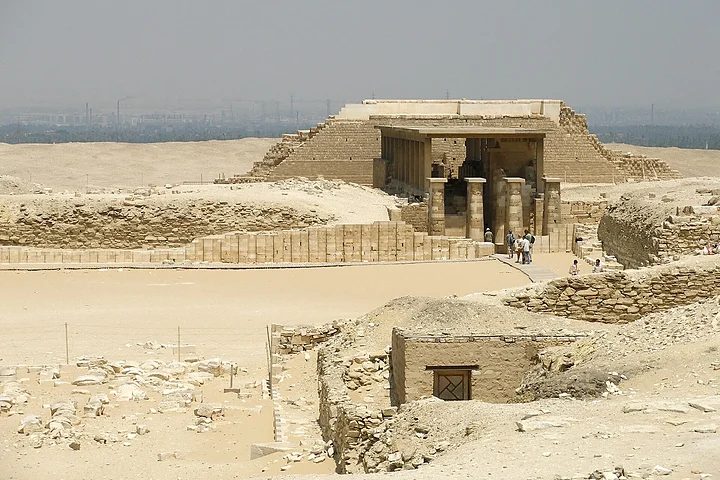
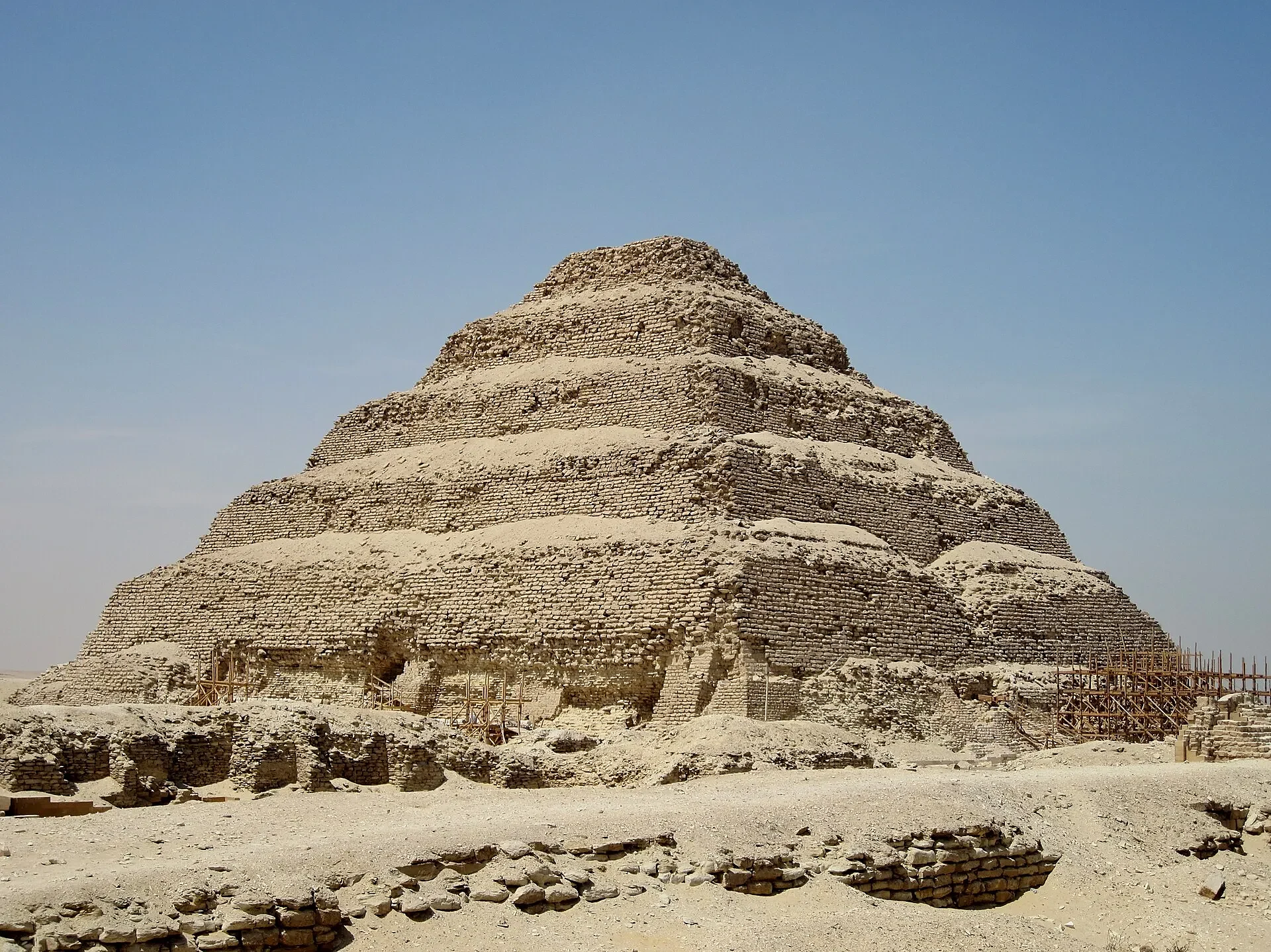
The Pyramid of Djoser, sometimes called the Step Pyramid of Djoser or Step Pyramid of Horus Netjerikhet, is an archaeological site in the Saqqara necropolis, Egypt, northwest of the ruins of Memphis. It was the first Egyptian pyramid to be built. The six-tier, four-sided structure is the earliest colossal stone building in Egypt. It was built in the 27th century BC during the 3rd Dynasty for the burial of Pharaoh Djoser. The pyramid is the central feature of a vast mortuary complex in an enormous courtyard surrounded by ceremonial structures and decoration.
The pyramid went through several revisions and redevelopments of the original plan. The pyramid originally stood 62.5 m (205 ft; 119 cu) tall, with a base of 109 m × 121 m (358 ft × 397 ft; 208 cu × 231 cu) and was clad in polished white limestone. As of 1997, the step pyramid (or proto-pyramid) was considered to be the earliest large-scale cut stone construction, although the nearby enclosure wall "Gisr el-Mudir" is suggested by some Egyptologists to predate the complex, and the South American pyramids at Caral are contemporary.
Ступенчатая пирамида в Саккаре — древнейшее из сохранившихся в мире крупных каменных зданий. Построено зодчим Имхотепом в Саккаре для погребения фараона Джосера около 2650 года до н. э.
Die Stufenpyramide des altägyptischen Königs Djoser (Djoser-Pyramide, auch Netjerichet-Pyramide) aus der 3. Dynastie des Alten Reiches um 2700 v. Chr. ist die älteste, mit einer Höhe von 62,5 Metern die neunthöchste der ägyptischen Pyramiden und eine der wenigen mit einer nichtquadratischen Grundfläche.
Mit diesem Bauwerk begann die erste Phase des Pyramidenbaus in Ägypten und die Monumentalisierung der Königsgräber. Die Stufenpyramide selbst wird vom größten aller Pyramidenkomplexe umschlossen, der eine große Anzahl von zeremoniellen Bauten, Strukturen und Höfen für den Totenkult enthält. Sie gilt nach dem einige hundert Meter westlich der Pyramide gelegenen Gisr el-Mudir als das zweitälteste noch erhaltene, aus behauenen Steinen gemauerte Bauwerk Ägyptens.
Als zentrales Bauwerk der Nekropole von Sakkara gehört sie als Teil der memphitischen Nekropolen seit 1979 zum UNESCO-Weltkulturerbe.
Le complexe funéraire de Djéser, édifié sous le règne du roi Djéser, se situe à Saqqarah, en Égypte. Il est, dans l'histoire de l'architecture égyptienne, le second ouvrage édifié en pierre de taille. Il marque une évolution importante de l'architecture monumentale. En effet, le tombeau du roi prend, pour la première fois et après de multiples modifications, la forme d'une pyramide. Cette innovation marque la naissance d'un nouveau type de sépulture. Les éléments cultuels ainsi que l'enceinte à redans représentent l'aboutissement d'une architecture évoluant depuis la IIe dynastie.
Deux noms sont à rattacher à cet édifice : celui de l'architecte Imhotep, qui conçut cet ouvrage, et celui de l'égyptologue et architecte Jean-Philippe Lauer qui consacra toute sa vie à étudier les vestiges de ce chef-d'œuvre de l'Ancien Empire.
La pirámide escalonada de Zoser es la supuesta tumba del faraón conocido como Zoser (Dyoser o Necherjet-Dyeser) de la tercera Dinastía del Antiguo Egipto (alrededor de 2650 a. C.). La estructura denominada antiguamente Dyeser Deyeseru «la más sagrada» o «sublime de las sublimes», según Manetón fue edificada por Imhotep. Es la construcción más notable de la necrópolis de Saqqara, al suroeste de la ciudad de Menfis, y fue el prototipo de las restantes pirámides egipcias.
Los exploradores de esta estructura fueron Von Minutoli, Karl R. Lepsius en el siglo XIX, los trabajos de excavación sistemática fueron de Cecil Firth, y de Jean-Philippe Lauer en el siglo XX.
Desde marzo de 2020 se puede visitar el interior de la pirámide de Zoser, tras años de una larga restauración que se inició en el año 2006.
Zoser Piramidi, basamaklı piramit ya da Zoser'in basamak piramidi, günümüzden 4 bin 700 yıl önce MÖ 27. yüzyılda Mısır'ın üçüncü hanedanı döneminde Firavun Zoser adına yapılmıştır. Antik Mısır'da yapılan ilk ve en eski piramittir. Tasarımı, çağının dehaları arasında gösterilen vezir İmhotep'e ait olan altı basamaklı piramit, başkent Kahire'nin batısındaki Sakkara bölgesinde yer almaktadır. Zoser piramidi diğer piramitlerden farklı olarak merdivenli inşa edildi. Piramidin girişi en üst basamaktadır. Firavun Zoser'e ait olan piramidin duvarları kabartmalarla süslüdür. Diğer piramitlerde mezar içleri süslenmemiştir. Bu da diğer piramitleri basamaklı piramitten ayırmaktadır.
Tamamlandığında, Zoser Piramidi 62 metre (204 fit) yüksekliği ile zamanının en yüksek yapısıydı. Çevresindeki kompleks, 40 dönümlük (16 hektar) bir alanı kaplayan ve 10,5 metre yüksekliğindeki bir duvarla çevriliydi, rahipler için bir tapınak, avlu, türbe ve yaşam alanlarını içeriyordu.
左塞尔金字塔(英语:Pyramid of Djoser)又称为阶梯金字塔(英语:step pyramid。实际上,阶梯金字塔是一类金字塔的总称,但有时专指左塞尔金字塔),是埃及的一座金字塔,位于塞加拉(Saqqara)。左塞尔金字塔为埃及第三王朝法老左塞尔的陵墓,是左塞尔命令宰相印何阗所设计建造的,估计在前2667年至前2648年建造,也是埃及第一座金字塔,也是首座由6个马斯塔巴组成的金字塔,每一层马斯塔巴都比下一层马斯塔巴更小。
左塞尔金字塔有62米(203英尺)高,底边为109米×125米(358英尺×410英尺),外部则是白色抛光石灰石。这座金字塔认为最早由方石组成的大型建筑,虽然附近的Gisr el-Mudir似乎比左塞尔金字塔还要早。人类已知最古老的未加工石造建筑可以追溯到公元前3000年,位于秘鲁卡拉尔。
Manba: Vikipediya – “Pyramid of Djoser” · CC BY-SA 4.0
Boshqa tillarda o‘qish: · · · · · ·