Bu matn hozircha boshqa tilda mavjud.
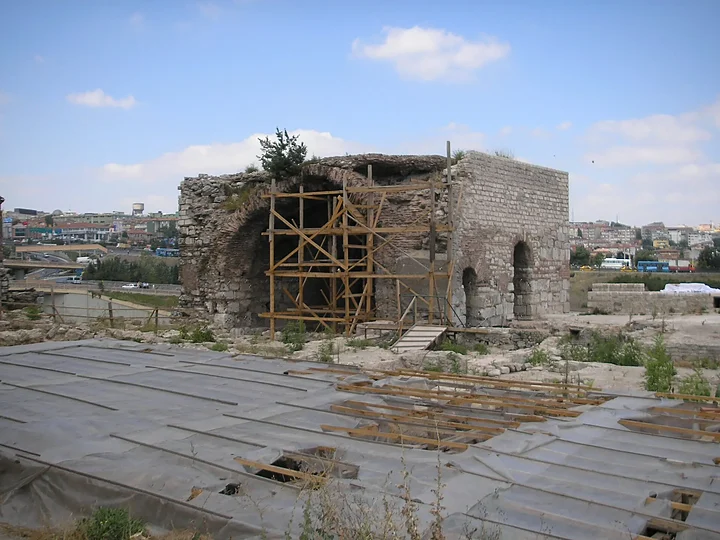
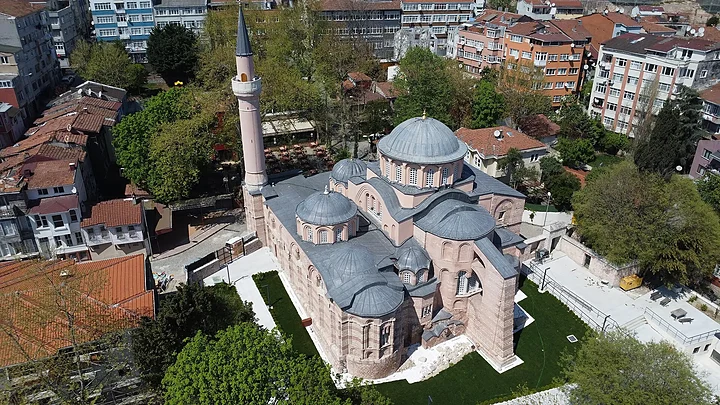
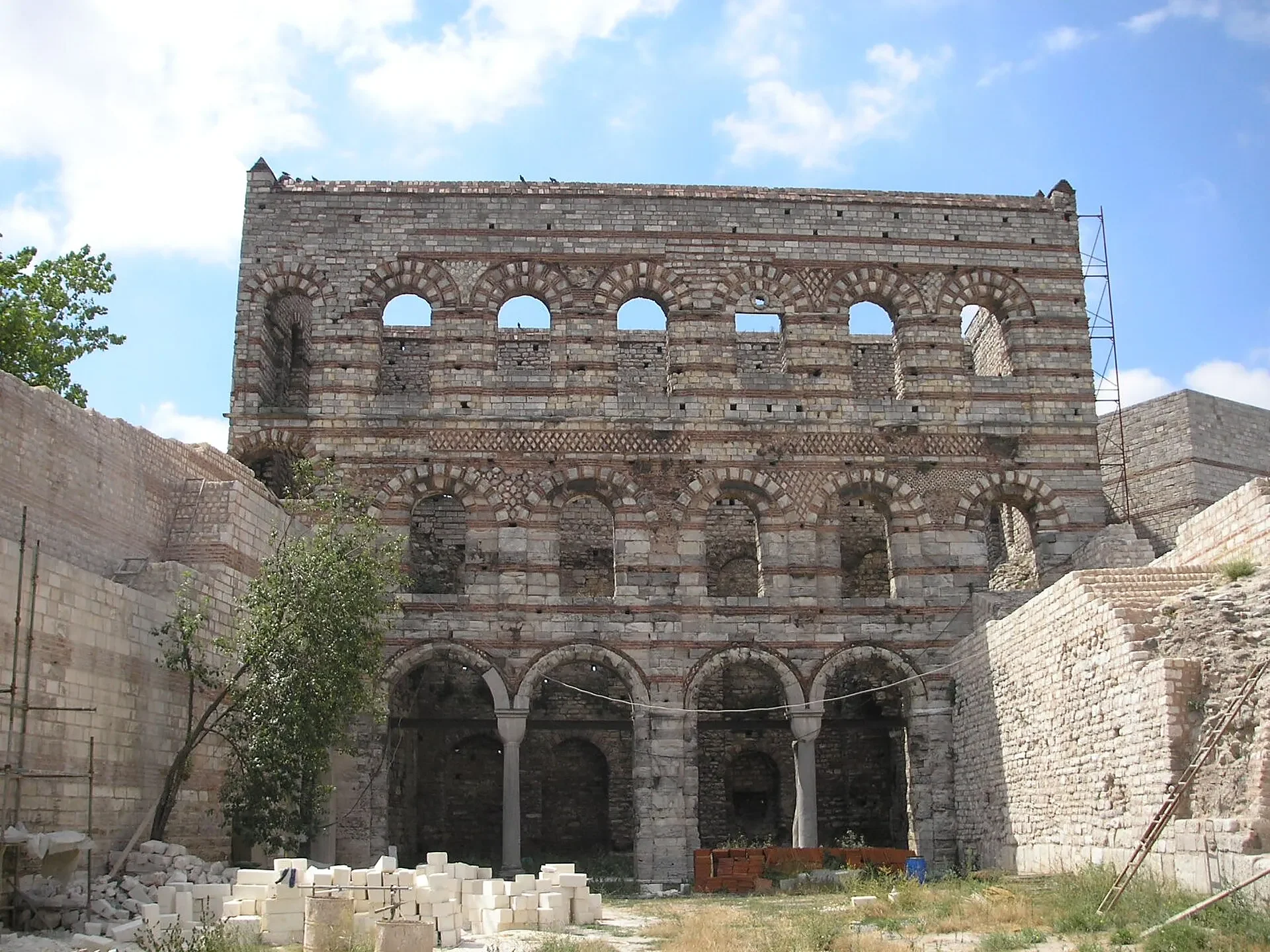
The Palace of the Porphyrogenitus (Greek: τὸ Παλάτιον τοῦ Πορφυρογεννήτου), known in Turkish as the Tekfur Sarayı ("Palace of the Sovereign"), is a late 13th-century Byzantine palace in the north-western part of the old city of Constantinople (present-day Istanbul, Turkey). An annex of the greater palace complex of Blachernae, it is the best preserved of the three Byzantine palaces to survive in the city (together with the ruins of the Boukoleon Palace; and the ruins of the Great Palace of Constantinople with its surviving substructures, retrieved mosaics and standing Magnaura section), and one of the few relatively intact examples of late Byzantine secular architecture in the world.
In 2021 it opened to the public as a museum after complete restoration and reroofing. It displays examples of the types of pottery and tiles made in the abandoned palace buildings in the 18th century.
Новый, или Малый Влахернский дворец — трёхэтажный дворец, построенный во Влахернах в начале правления Палеологов. Предположительно датируется поздним XIII в. Отождествляется с упоминаемым в византийских источниках дворцом Константина Палеолога (сына имп. Михаила VIII Палеолога) Порфирогенита (Багрянородного). Иногда ошибочно связывается с именем Константина VII Порфирогенита (913-920 гг.). Возможно, что в здании XIII в. использованы части более старых построек.
Als Porphyrogennetos-Palast (auch Palast des Konstantin Porphyrogenitus oder Tekfur-Palast; türkisch Tekfur Sarayı, „Palast des Kaisers“) wird ein byzantinischer Palast aus dem 13. Jahrhundert im nordwestlichen Teil der Altstadt von Istanbul (Konstantinopel) bezeichnet.
Der Palast wurde vermutlich in der 2. Hälfte des 13. Jahrhunderts erbaut. Zwischen Vor- und Hauptmauer in die Theodosianische Landmauer eingefügt, war er ein Teil des Palastviertels um den Blachernen-Palast. Der Palast des Konstantin Porphyrogenitos ist nicht nach Kaiser Konstantin Porphyrogennetos benannt worden, der im 10. Jahrhundert regierte; er entstand lange nach dessen Zeit. Der Palast erhielt seinen Namen nach Konstantin Palaiologos Porphyrogennetos, einem Sohn des Kaisers Michael VIII. Porphyrogennetos (πορφυρογέννητος), d. h. „der Purpurgeborene“ war in diesem Zusammenhang der Beiname eines Mitglieds des Herrscherhauses, das wie Konstantin Palaiologos als Sohn eines byzantinischen Kaisers im Purpurgemach des kaiserlichen Palastes geboren wurde, und als Erbe des byzantinischen Throns in Frage kam.
Le palais du Porphyrogénète (en grec : τὰ βασίλεια τοῦ Πορφυρογεννήτου) connu en turc sous le nom de Tekfur Sarayı (« palais du Souverain ») est un ancien palais byzantin du XIIIe siècle au nord-ouest de la ville de Constantinople (aujourd'hui Istanbul). C'est une annexe du complexe plus important du palais des Blachernes. C'est aussi le seul palais byzantin à avoir survécu et l'un des rares exemples d'architecture laïque de la fin de l'Empire byzantin à être resté relativement intact.
El Palacio de los Porfirogénetas o de Constantino Porfirogéneta (turco: Tekfur Sarayı, que significa «Palacio del Soberano») fue un palacio imperial bizantino del siglo XIII y del que en la actualidad sólo se conservan las ruinas, localizadas en la parte noroccidental de la antigua ciudad de Constantinopla (actual Estambul, Turquía). Es un anexo del complejo palacial de Blanquerna y el mejor palacio bizantino conservado de los tres que actualmente se conservan en la ciudad: el palacio de Bucoleón y el Gran palacio de Constantinopla, de donde se sacaron grandes mosaicos conservados en el Museo de los Mosaicos del Gran palacio; y uno de los ejemplos intactos de arquitectura tardía bizantina secular del mundo.
En 2021 se abrió al público como museo tras su restauración y cubrimiento completo. Exhibe ejemplos de cerámica y azulejos realizados en el palacio abandonado en el siglo XVIII.
Tekfur Sarayı veya Porfirogenitus Sarayı İstanbul'da Fatih ilçesi sınırları içerisindeki Edirnekapı semtinde bulunan, Bizans devrinde saray, Osmanlı döneminde çini atölyesi ve cam fabrikası olarak kullanılmış, günümüzde Çini Müzesi olan tarihî yapı.
11.-15. yüzyıllar arasında Bizans İmparatorluğu Sarayı olarak kullanılan Blaherne Sarayı kompleksinden günümüze sağlam olarak ulaşmış tek bölümdür ve bütün dünyada geç Bizans mimarisinin nispeten bozulmamış örneklerindendir. İstanbul'un fethi sırasında büyük hasar gören yapıdan geriye kalan bölüm, Osmanlı döneminde Tekfur Sarayı ya da Tekir Sarayı adıyla anılırdı.
18. yüzyılda çini sanatını canlandırma amacıyla içinde çini atölyesi kuruldu; 19. yüzyılda ise yapının kuzey bölümü cam fabrikası olarak kullanıldı. Türk kültür tarihinde "imparatorluk evi" ismiyle de bilinen Tekfur Sarayı 2014'te İBB'ye bağlı Osmanlı Çini Müzesi olarak ziyarete açıldı.
紫衣贵族宫(古希腊语:τὰ βασίλεια τοῦ Πορφυρογεννήτου,土耳其语:Tekfur Sarayı)是13世纪末拜占庭帝国皇宫,位于君士坦丁堡(今土耳其伊斯坦布尔)老城西北部,附属于布拉赫奈宫,它是该市保存最完好的三座拜占庭宫殿之一。
Manba: Vikipediya – “Palace of the Porphyrogenitus” · CC BY-SA 4.0
Boshqa tillarda o‘qish: · · · · · ·