Bu matn hozircha boshqa tilda mavjud.
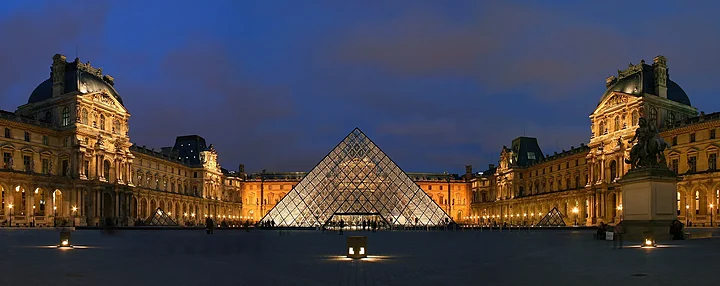
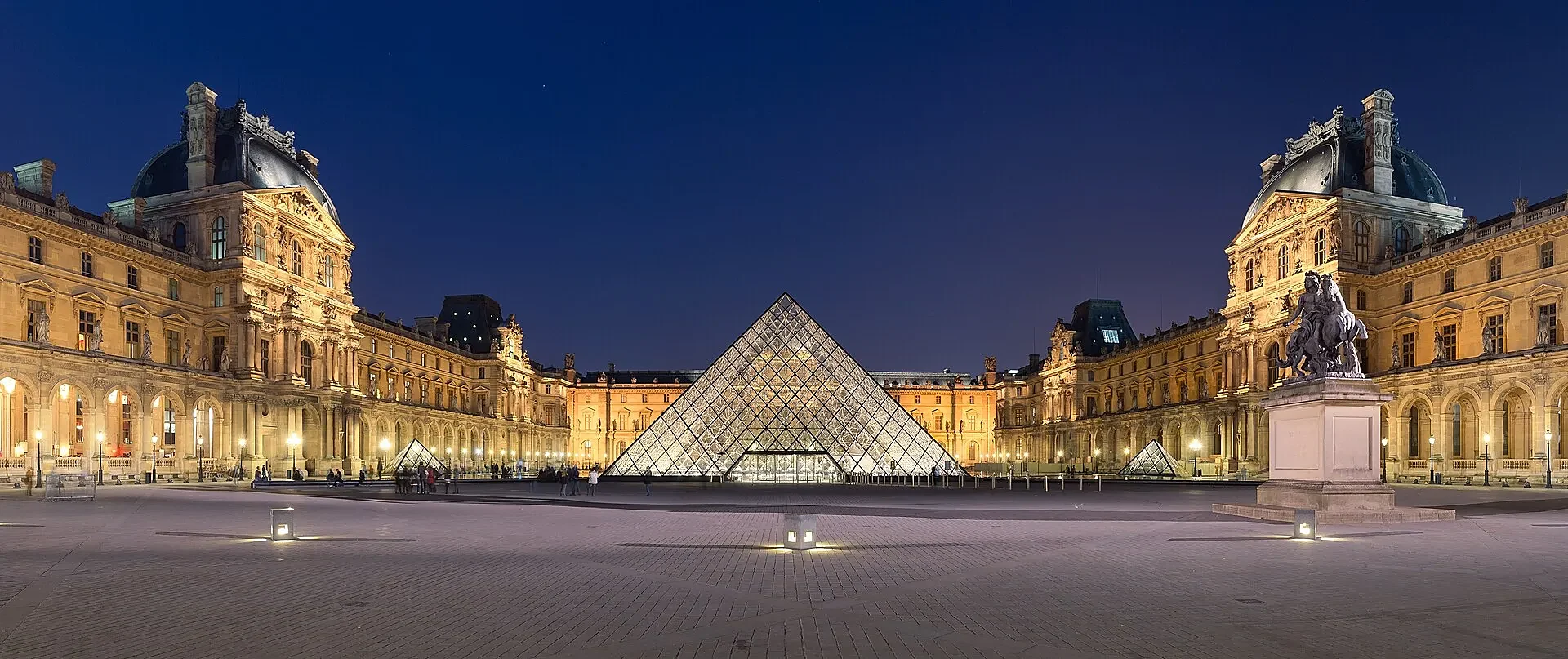
The Louvre Pyramid (French: Pyramide du Louvre) is a large glass-and-metal entrance way and skylight designed by the Chinese-American architect I. M. Pei. The pyramid is in the main courtyard (Cour Napoléon) of the Louvre Palace in Paris, surrounded by three smaller pyramids of the same style which also serve as lightwells. A companion Inverted Pyramid also provides light to underground passageways of the Louvre. The large pyramid serves as the main entrance way to the Louvre Museum, allowing light to the below ground visitors hall, while also allowing sight lines of the palace to visitors in the hall, and through access galleries to the different wings of the palace. On three sides are low modernist triangular reflecting pools with fountains. Completed in 1989 as part of the broader Grand Louvre project, it has become a landmark of Paris and a symbol of the museum.
Стеклянная пирамида Лувра во дворе Наполеона (cour Napoléon) служит главным входом в Лувр и является одним из символов Парижа. Строилась с 1985 по 1989 год, проект создал знаменитый американский архитектор китайского происхождения Бэй Юймин.
Метро: линии 1 и 7, станция Palais Royal — Musée du Louvre.
Die Glaspyramide im Innenhof des Louvre wurde von 1985 bis 1989 gebaut und dient als Haupteingang für das Museum des Louvre in der französischen Hauptstadt Paris.
La pyramide du Louvre est une pyramide constituée de verre et de métal, située au milieu de la cour Napoléon du musée du Louvre à Paris. Elle abrite l'entrée principale du musée. Elle a été inaugurée une première fois par le président de la République François Mitterrand le 4 mars 1988, et une seconde fois le 29 mars 1989.
Commandée par François Mitterrand en 1983, la pyramide a été conçue par l'architecte sino-américain Ieoh Ming Pei. La structure métallique qui supporte le parement en verre est faite d'acier et d'aluminium et pèse 200 tonnes ; elle s'élève à 21,64 mètres sur une base carrée de 35,42 mètres de côté. Elle est recouverte de 603 losanges et de 70 triangles en verre et est la première grande construction à utiliser le verre feuilleté.
La pyramide a suscité une grande controverse lors de la présentation de son projet en 1984.
La Pirámide del Louvre (en francés: pyramide du Louvre) es una pirámide de vidrio y metal situada en el centro del cour Napoléon del Museo del Louvre de París (Francia), que alberga la entrada principal del museo. Fue inaugurada una primera vez por el presidente de Francia François Mitterrand el 4 de marzo de 1988, y una segunda vez el 29 de marzo de 1989.
Encargada por François Mitterrand en 1983, la pirámide fue diseñada por el arquitecto chino-estadounidense Ieoh Ming Pei. Nació el 26 de abril de 1917 y falleció el 15 de mayo de 2019; a los 18 años emigró a EE. UU. Fue en la década de los 80 cuando creó esta obra. La estructura metálica que sostiene el revestimiento de vidrio está hecha de acero y aluminio y pesa 200 toneladas; tiene una altura de 21.64 metros sobre una base cuadrada de 35.42 metros de lado. Está recubierta con 603 rombos y 70 triángulos de vidrio y fue la primera gran construcción que utilizó el vidrio laminado. La pirámide suscitó una gran controversia cuando se presentó el proyecto en 1984.
Louvre Piramidi, Paris'teki Louvre Müzesi'nin avlusunda bulunan cam ve metalden oluşturulmuş piramittir.
1989 yılında bitirilen dört piramitten büyük olanı müzenin ana girişidir.
卢浮宫金字塔(法语:Pyramide du Louvre)是一座位于法国巴黎卢浮宫,由贝聿铭设计的大型玻璃与金属结构入口与天窗。此金字塔位于卢浮宫的主中庭拿破仑庭院之中,并被三座较小的金字塔所环绕。大金字塔作为卢浮宫博物馆的主要入口,让自然光照入地下的游客大厅,同时也让在大厅中的访客能观赏宫殿外观,并可通过通道通往宫殿的不同翼楼。此金字塔于1989年完工,为更大规模的大卢浮计划的一部分。如今已成为巴黎的地标之一。
Manba: Vikipediya – “Louvre Pyramid” · CC BY-SA 4.0
Boshqa tillarda o‘qish: · · · · · ·