Bu matn hozircha boshqa tilda mavjud.
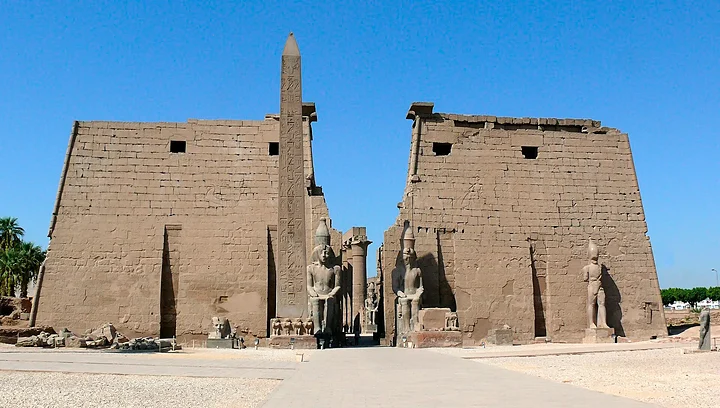
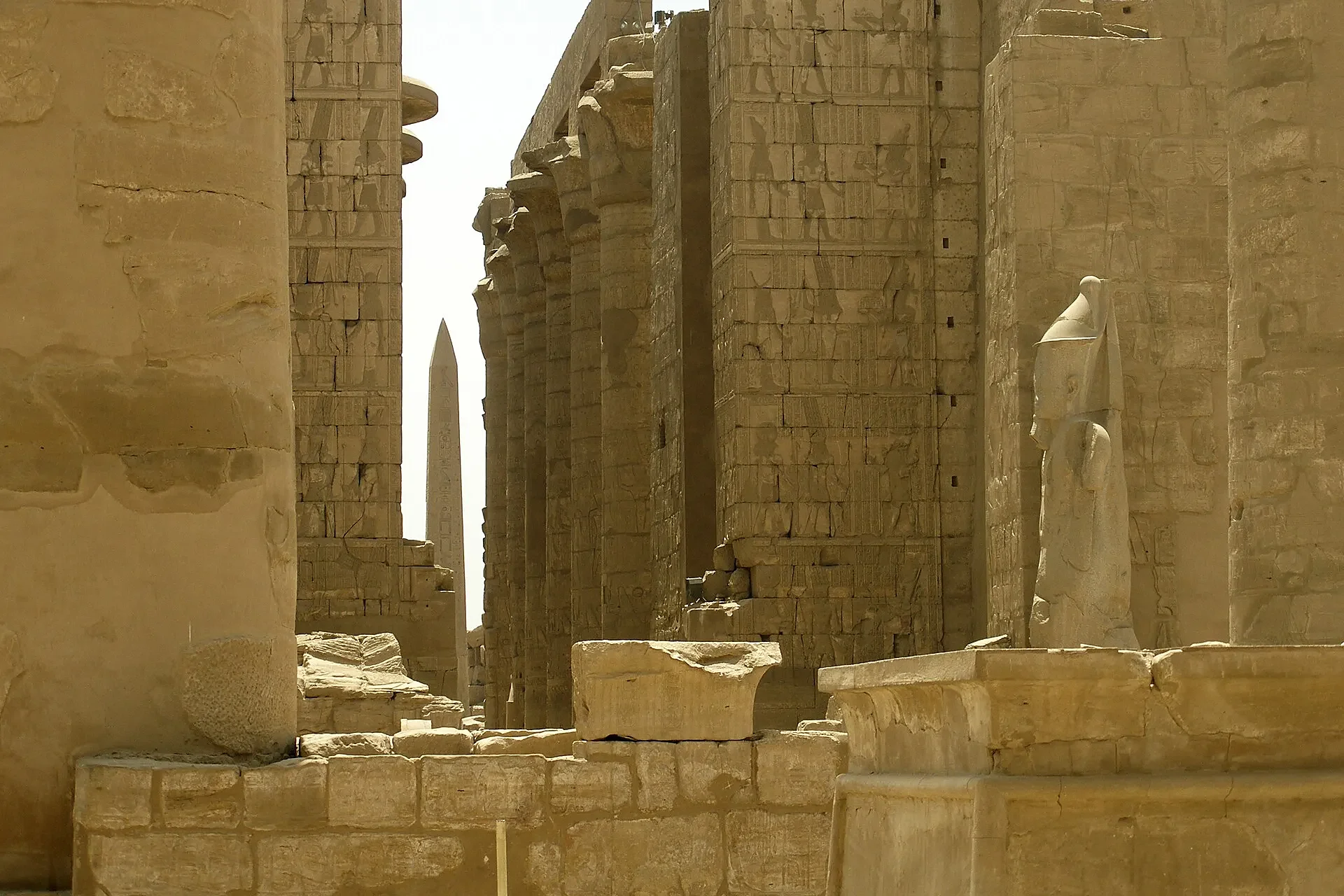
The Karnak Temple Complex, commonly known as Karnak (), comprises a vast mix of temples, pylons, chapels, and other buildings near Luxor, Egypt. Construction at the complex began during the reign of Senusret I (reigned 1971–1926 BCE) in the Middle Kingdom (c. 2000–1700 BC) and continued into the Ptolemaic Kingdom (305–30 BCE), although most of the extant buildings date from the New Kingdom. The area around Karnak was the ancient Egyptian Ipet-isut ("The Most Selected of Places") and the main place of worship of the 18th Dynastic Theban Triad, with the god Amun as its head.
It is part of the monumental city of Thebes, and in 1979 it was added to the UNESCO World Heritage List along with the rest of the city.
Карнакский храм (Ипет-сут егип. Ipt-swt — «(наиболее) избранное место») — крупнейший храмовый комплекс Древнего Египта, главное государственное святилище Нового царства. Ансамбль включает храмы, посвящённые фиванской триаде — верховному богу Амону-Ра, его супруге Мут и сыну Хонсу. Расположен на территории древних Фив в современном Карнаке — небольшом селении, лежащем на восточном берегу Нила в 2,5 км от Луксора.
Die Karnak-Tempel liegen als größte Tempelanlage von Ägypten in Karnak, einem Dorf etwa 2,5 Kilometer nördlich von Luxor und direkt am östlichen Nilufer. Die ältesten heute noch sichtbaren Baureste des Tempels stammen aus der 12. Dynastie unter Sesostris I. Bis in die römische Kaiserzeit wurde die Tempelanlage immer wieder erweitert und umgebaut.
Le complexe religieux de Karnak — appelé temple de Karnak, ou simplement Karnak — comprend un vaste ensemble de ruines de temples, chapelles, pylônes et d’autres bâtiments situés au nord de Thèbes, aujourd’hui la ville de Louxor, en Égypte, sur la rive Est du Nil.
Le complexe de Karnak, reconstruit et développé pendant plus de 2 000 ans par les pharaons successifs, de Sésostris Ier au Moyen Empire à l’époque ptolémaïque, s’étend sur plus de 2 km2 et il est composé de trois enceintes (espaces fermés par un mur). Il est le plus grand complexe religieux de toute l’Antiquité.
Temple le plus important de la XVIIIe dynastie, il était consacré à la triade thébaine avec à sa tête le dieu Amon-Rê.
Karnak (al-Karnak, الكرنك, "ciudad fortificada", llamada en el Antiguo Egipto Ipet isut, "el más selecto de los lugares") es el nombre de una pequeña población de Egipto, situada en la ribera oriental del río Nilo, al norte de Luxor, la zona de la antigua Tebas, que albergaba el complejo religioso más importante del Antiguo Egipto. Su construcción comenzó durante el reinado de Sesostris I (r. 1971-1926 a. C.) en el Imperio Medio y continuó hasta el Período ptolemaico (305-30 a. C.), aunque la mayoría de edificios relevantes datan del Imperio Nuevo.
Karnak Tapınak Kompleksi, yaygın olarak Karnak (/ˈkɑːr.næk/) olarak bilinir, Mısır'ın Luksor yakınlarındaki çok sayıda tapınak, pilon, şapel ve diğer yapılardan oluşur. Kompleksteki inşaat, Orta Krallık'ta (yaklaşık MÖ 2000-1700) I. Senusret'in (MÖ 1971-1926 yılları arasında hüküm sürdü) saltanatı sırasında başladı ve Ptolemaios Krallığı'nda (MÖ 305-30) devam etti, ancak mevcut binaların çoğu Yeni Krallık'tan kalmadır. Karnak'ın çevresindeki bölge, Antik Mısır'ın Ipet-isut'u ("En Seçkin Yerler") ve başında tanrı Amun bulunan 18. Hanedan Teb Üçlüsü'nün ana ibadet yeriydi.
卡纳克(Karnak)神庙是底比斯最为古老的庙宇,在尼罗河东岸的卢克索镇北4千米处,该神庙经很长时间陆续建造起来,由砖墙隔成三部分。其中中间的部分保存得最完好,也是面积最大的一部分,占地约有30公顷,也是献给太阳神阿蒙的;左侧的是献给Montu神的,占地2.5公顷;另一个是献给阿蒙神的妻子——形为秃鹫的姆特女神,现在尚未发掘。
在卡纳克神庙的周围有孔斯神庙和其他小神庙,每个宗教季节仪式从卡纳克神庙开始,到卢克索神庙结束。二者之间有一条一公里长的石板大道,两侧密排着圣羊像,路面夹杂着一些包着金箔或银箔的石板,闪闪发光。
Manba: Vikipediya – “Karnak” · CC BY-SA 4.0
Boshqa tillarda o‘qish: · · · · · ·