Bu matn hozircha boshqa tilda mavjud.
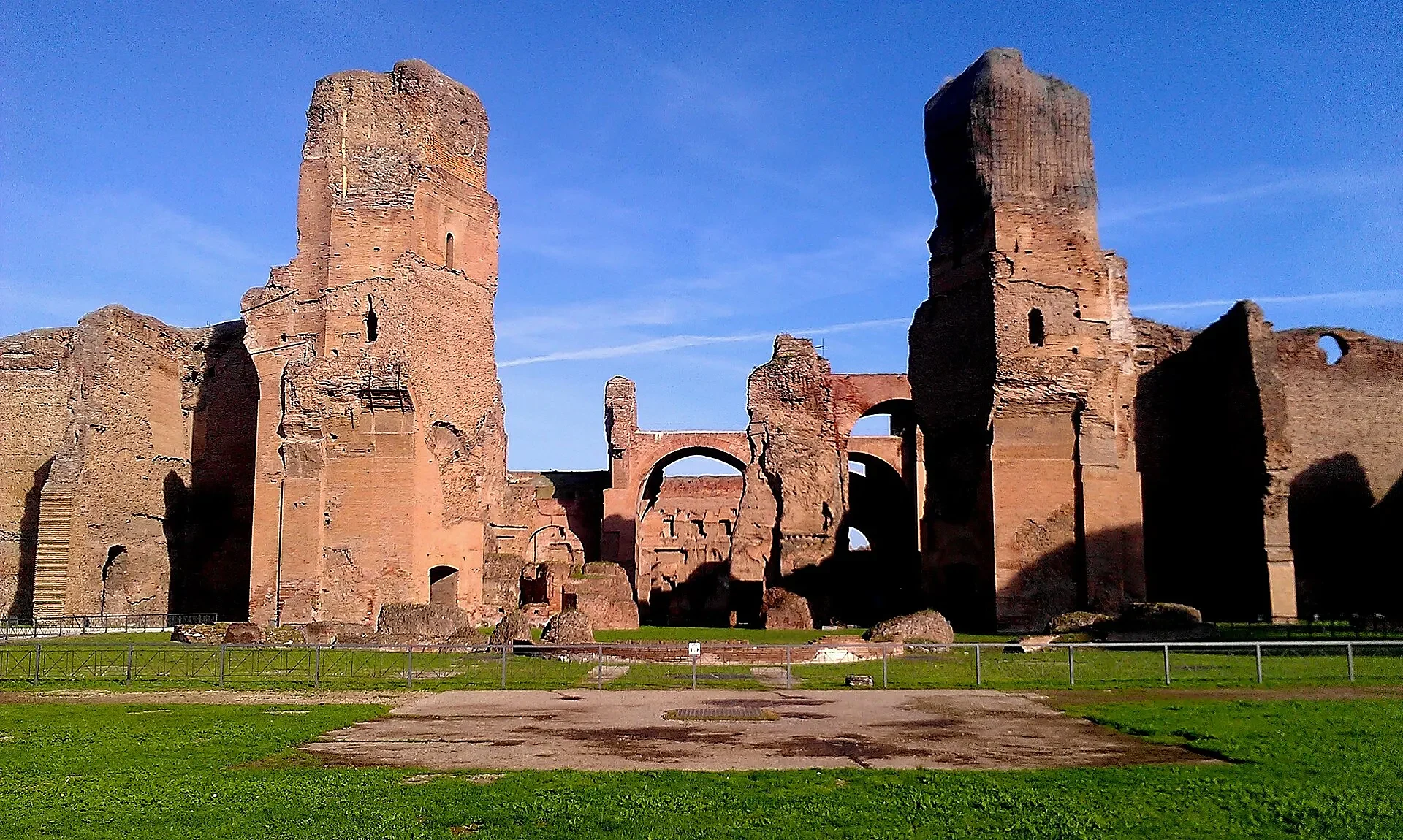
The Baths of Caracalla (Italian: Terme di Caracalla) in Rome, Italy, were the city's second largest Roman public bath complex, or thermae, after the Baths of Diocletian. The baths were likely built between AD 212 (or 211) and 216/217, during the reigns of emperors Septimius Severus and Caracalla. They were in operation until the 530s and then fell into disuse and ruin.
Both during and since their operation as baths, they served as inspiration for many other notable buildings, ancient and modern, such as the Baths of Diocletian, the Basilica of Maxentius, the original Pennsylvania Station in New York City, Chicago Union Station and the Senate of Canada Building. Artworks recovered from the ruins include famous sculptures such as the Farnese Bull and the Farnese Hercules.
Today, the Baths of Caracalla are a tourist attraction.
Термы Каракаллы (итал. Terme di Caracalla) — термы императора Каракаллы в Риме, официально именуемые термами Антониниана (лат. Thermae Antoninianae). Они находились у Аппиевой дороги, за Капенскими воротами, между Авентином и Целием. Строительство началось в 212 году н. э. и было закончено в 217 году после смерти императора. Двор терм Каракаллы имел размер 400 на 400 м, центральный комплекс — 150 на 200 м.
Die Caracalla-Thermen (lateinisch Thermae Antoninianae) sind antike Badeanlagen in Rom. Sie zählen neben Diokletiansthermen und Trajansthermen zu den größten Thermenanlagen der Stadt Rom.
Les thermes de Caracalla (en latin : Thermae Antoninianae), inaugurés à Rome sous l’empereur romain Caracalla en 216 après. J.-C., sont les plus grands et les plus luxueux thermes romains réalisés jusqu'alors, même s'ils sont dépassés par la suite. En plus des équipements concernant directement les bains, ce complexe propose des activités variées (bains publics et privés, nage, massage, exercices de gymnastique), ce qui explique sa taille gigantesque. Une superficie de plus de onze hectares, de la place pour 1 600 baigneurs et 64 citernes de 80 000 litres chacune. C'est aujourd'hui l'édifice thermal le mieux conservé de l'Empire romain. Les ruines qui demeurent encore à Rome ont conservé leur aspect colossal.
Las termas de Caracalla, o termas Antoninas, fueron las segundas termas más grandes de la ciudad de Roma. El complejo hidráulico fue construido entre los años 212 y 217, durante el reinado de los emperadores Septimio Severo y Caracalla. Continuaron en funcionamiento hasta la guerra gótica en 537, cuando se cortaron los suministros de agua y se abandonaron, y posteriormente la estructura fue destruida en gran medida durante el terremoto de 847. Actualmente, las extensas ruinas de estas termas son una atracción turística importante.
卡拉卡拉浴场(拉丁语:Thermae Antoninianae,意大利语:Terme di Caracalla)是一个位于罗马的古罗马公共浴场,建于公元212年到216年,卡拉卡拉统治罗马帝国期间。其遗址如今为一个旅游胜地。
整个浴场占地面积为13公顷(33英亩),主建筑长228米(750英尺),宽116米(380英尺),高38.5米(125英尺),能同时容纳2,000人洗澡。
卡拉卡拉浴场不仅是一组浴池,还是一个娱乐休闲的场所。它还包括一个公共图书馆,和罗马其它图书馆一样,分成两个独立且面积相等的部分,一部分储藏的是希腊语的书籍,另一部分为拉丁语的书籍。浴场外还有购物中心。
整座建筑采用热坑方式供暖,这是一种在地下烧煤或木头来加热水的系统,直到19世纪仍然使用。
20世纪初期,浴场的设计依然为一些现代建筑提供了灵感,包括美国纽约宾夕法尼亚车站和孟加拉国民大会大厦。
Manba: Vikipediya – “Baths of Caracalla” · CC BY-SA 4.0
Boshqa tillarda o‘qish: · · · · ·