Bu matn hozircha boshqa tilda mavjud.
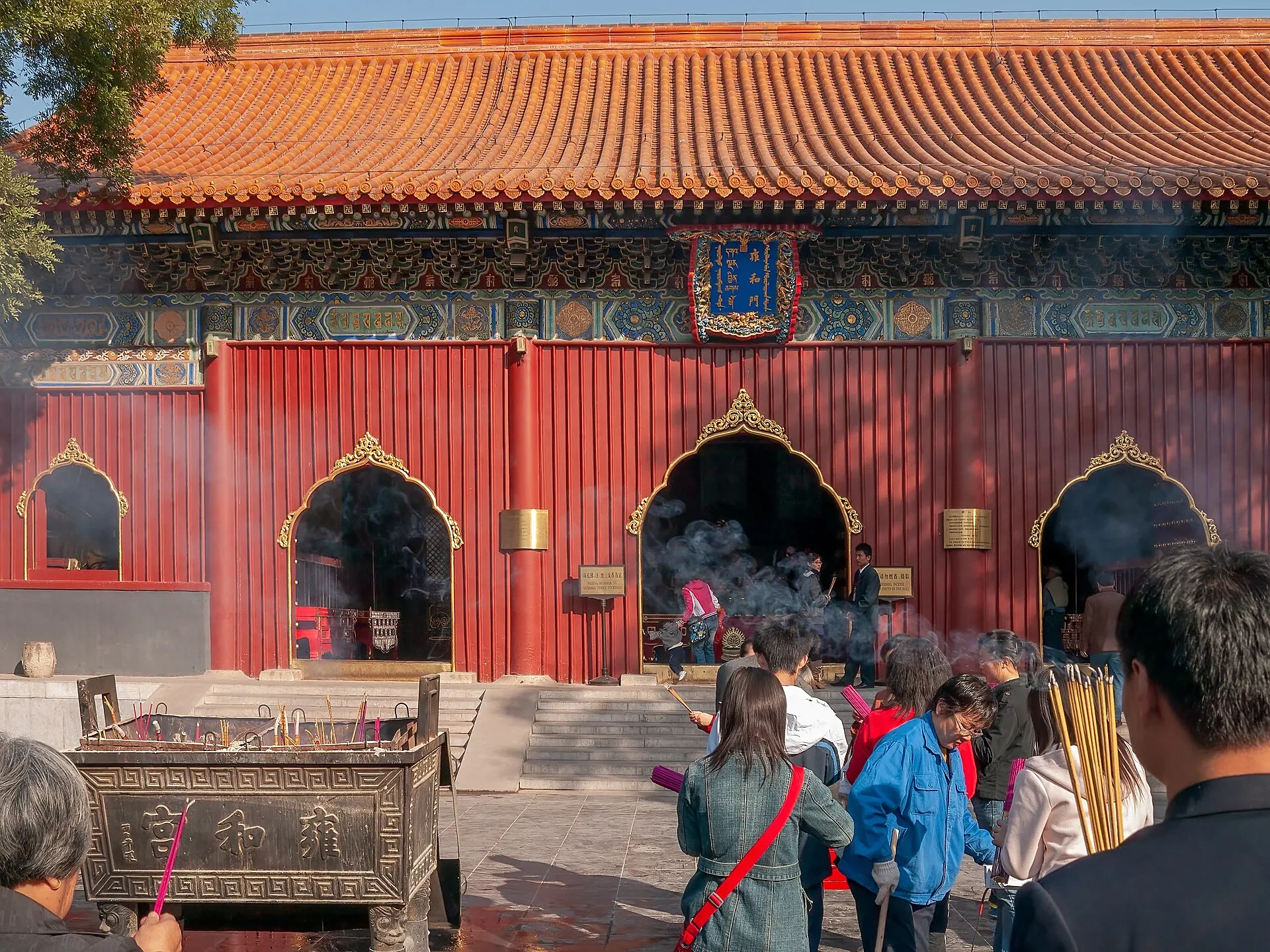
The Yonghe Temple (Chinese: 雍和宮; lit. 'Palace of Harmony and Peace'; also known as the Yonghe Lamasery or Lama Temple) is a temple and monastery of the Gelug school of Tibetan Buddhism located on 12 Yonghegong Street, Dongcheng District, Beijing, China. The building and artwork of the temple is a combination of Han Chinese and Tibetan styles. This building is one of the largest Tibetan Buddhist monasteries in China proper. The current abbot is Lama Hu Xuefeng. Yonghe Temple was the highest Buddhist temple in the country during the middle and late Qing dynasty.
Тибетский буддийский храм Юнхэгун (кит. упр. 雍和宮, пиньинь Yōnghégōng, Маньчжурский:Hūwaliyasun hūwaliyaka gung, монг. Найралт Найрамдах Сүм, тиб. དགའ་ལྡན་བྱིན་ཆགས་གླིང་, Вайли Dga'-ldan Byin-chags-gling) — храм, называемый «Дворец мира и гармонии, храм Ламы», «Юнхэ Ламасэри», или — распространённое — «Ламаистский храм». Является монастырём и храмом школы тибетского буддизма Гэлуг, располагается в северо-восточной части Пекина. Это — крупный и значимый монастырь. В архитектуре соединены китайский и тибетский стили.
Der Yonghe-Tempel (chinesisch 雍和宫, Pinyin Yōnghégōng, wörtlich: Palast des Friedens und der Harmonie) in Peking, ist die ehemalige Residenz des Prinzen Yinzhen, welche 1744 unter Kaiser Qianlong zu Ehren seines Vaters in einen lamaistischen Tempel umgebaut wurde, ist dieser umgangssprachlich daher auch als der Lamatempel bekannt.
Le temple de Yonghe, temple des Lamas, « Lamaserie Yonghe » ou Yonghe Gong (chinois : 雍和宫 ; pinyin : yōnghé gōng ; litt. « palais de la paix et de l'harmonie ») est un temple du bouddhiste tibétain de Pékin fondé en 1722, sous la dynastie Qing. Le premier bâtiment a été construit en 1694, d'abord pour abriter les eunuques.
Une des statues représente un bodhisattva debout atteignant une hauteur de douze mètres. Différents bâtiments abritent toutes les formes de Bouddha et Bodhisattva typiquement tibétaines. Ce site accueille également des expositions temporaires sur le bouddhisme tibétain.
Les cérémonies religieuses tibétaines y sont toujours pratiquées par des moines tibétains et han.
El templo de Yonghe (palacio de la paz y la armonía) es uno de los monumentos budistas más importantes de Pekín (China). Fue establecido bajo la dinastía Qing.
Lama Tapınağı veya Yonghe Tapınağı (Çince: 雍和宫; pinyin: Yōnghé gōng; "Barış ve Uyum Sarayı"), Çin'in başkenti Pekin'de bulunan bir Budist tapınağıdır. Tapınak, Dongcheng'de yer almakta olup Tibet Budizmi'nin Gelug mezhebi ile ilişkilidir.
雍和宫位于中华人民共和国北京市东城区雍和宫大街12号,是北京地区现存规模最大的藏传佛教格鲁派寺院。1694年,康熙帝在明代内官监官房旧址上为皇四子胤禛修建府邸,后因其受封和硕雍亲王,故称雍亲王府。雍正三年(1725年),改名雍和宫。1744年,乾隆帝将其改建为藏传佛教格鲁派寺院,赐藏语寺名“噶丹敬恰林”,意为“兜率壮丽洲”。
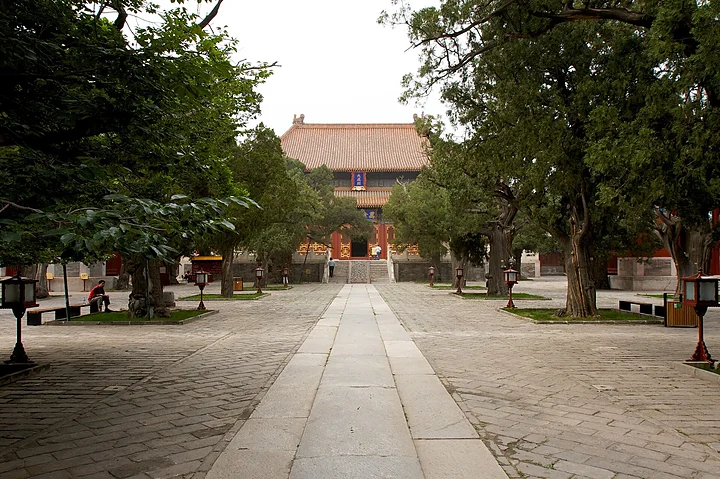
雍和宫坐北朝南,南北长约400米,占地约6.6万平方米。整体沿中轴线展开,分东、中、西三路,院落层层递进,兼具清代皇家建筑规制与藏传佛教寺院特色。中轴线上依次分布牌楼、昭泰门、雍和门、雍和宫殿、永佑殿、法轮殿和万福阁等。
其前部延续汉传佛教寺院“七堂伽蓝”的布局,后部殿宇逐级升高,形成由王府、行宫到皇家寺院的空间层次。法轮殿顶部设有“一大四小”五座藏式天窗,象征须弥山及四大部洲。讲经殿、密宗殿、时轮殿、药师殿等“四大扎仓”,体现其作为藏传佛教学府的功能。
雍和宫不仅是宗教活动场所,亦长期承担清代中央政府联系和管理蒙藏宗教事务的职能。乾隆帝改建此寺,一方面纪念雍正帝“龙潜旧邸”,另一方面亦通过尊崇格鲁派、联络蒙藏宗教上层,以加强边疆治理。寺内立有乾隆御制《喇嘛说》碑,满、汉、蒙、藏四种文字镌刻,反映清廷对藏传佛教及活佛转世制度的管理理念。
中华人民共和国建立后,雍和宫得到多次修缮和保护。1950年至1952年,国家两次拨款对其进行全面修缮。1957年,雍和宫被列为第一批北京市文物保护单位。1961年,被国务院公布为第一批全国重点文物保护单位。1981年2月,雍和宫作为宗教活动场所重新对社会开放。1983年,被确定为汉族地区佛教全国重点寺院。1995年,“雍和宫藏传佛教艺术博物馆”挂牌成立。
Manba: Vikipediya – “Yonghe Temple” · CC BY-SA 4.0
Boshqa tillarda o‘qish: · · · · · ·