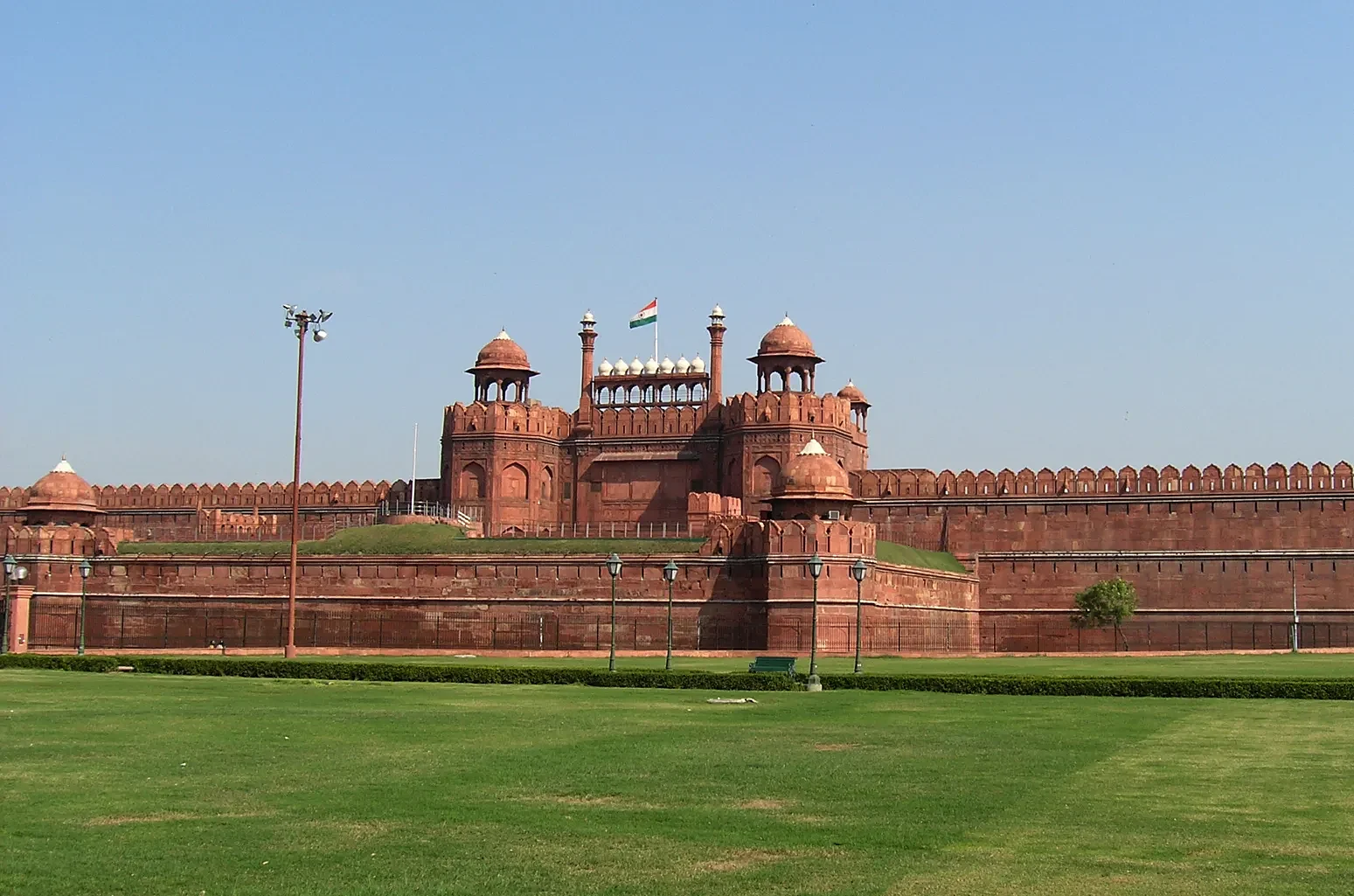
Qizil qal’a yoki Lal Qila – Hindistondagi tarixiy qalʼa boʻlib, u Boburiy imperatorlarining asosiy qarorgohi sifatida foydalanilgan. Imperator Shoh Jahon poytaxtni Agradan Dehliga koʻchirishga qaror qilganda, 1638-yil 12-mayda Qizil qal’a qurilishi boshlangan. Qal’a dizayni Toj Mahalni qurgan meʼmor Ustod Ahmad Lohuriyga tegishli. Qal’ani Shoh Jahon davridagi Boburiy arxitekturasining choʻqqisi deb atash mumkin.
Лал-Кила (хинди लाल किला), или Красный форт, — историческая цитадель Дели эпохи Великих Моголов, построенная в 1652 году. Построена из красного песчаника при Шах-Джахане в середине XVII века как дворец его укрепленной столицы Шахджаханабад. Примыкает к старому Форту Салимгарх, построенному Исламом Шах Сури в 1546 году. Главная резиденция императоров в династии Великих Моголов в течение почти 200 лет, до 1856 года.
The Red Fort (Lal Qila in Hindi; Hindi pronunciation: [laːl 'qɪlaː]) is a historic Mughal fort located in the Old Delhi area of Delhi, India. Serving as the main residence of the Mughal emperors, it was commissioned by Emperor Shah Jahan on the 12th of May 1639; the fort was constructed following his decision to shift the Mughal capital from Agra to Delhi. Originally adorned in red and white, the fort's design is attributed to Ustad Ahmad Lahori, the architect of the Taj Mahal. The Red Fort is a prominent example of Mughal architecture from Shah Jahan's reign, combining Persian and Indian architectural styles.
Das Rote Fort (Urdu لال قلعہ Lal Qila) in der nordindischen Stadt Delhi ist eine Festungs- und Palastanlage aus der Epoche des Mogulreiches. Sie wurde zwischen 1639 und 1648 für den Mogulkaiser Shah Jahan erbaut und gehört seit 2007 zum Weltkulturerbe der UNESCO. Ihren Namen erhielt sie von der charakteristischen roten Farbe des für die Festungsmauern verwendeten Sandsteins.
Le fort Rouge, aussi appelé palais-fort de Shahjahanabad ou Lal Qil'ah (en hindoustani : लाल क़िला ou لال قلعہ (Lal qil'a), en persan : لال قلعه (Lal qal'a), « Fort rouge » dans les deux langues ; de ses noms initiaux क़िला-ए-मुबारक (qilā ē mubārak) ou قلعہ مبارک en hindoustani, « Fort béni » ou « Fort auspicieux », ou قلعه معلی (qal'a-e mu'allā) en persan, « Fort exalté ») est une forteresse et une ancienne résidence impériale d'architecture moghole à Delhi en Inde. Il est inscrit depuis 2007 sur la liste du patrimoine mondial.
Le fort est aussi le lieu depuis lequel le Premier ministre indien s'adresse à la nation chaque 15 août (l'Inde a acquis son indépendance le 15 août 1947), il est le symbole de l'indépendance de l'Inde.
El fuerte de Delhi, ubicado en la ciudad india de Delhi, es llamado también Fuerte rojo o Lal Qila (en hindi) por el color de la piedra arenisca con que se construyó. No debe confundirse con el Fuerte de Agra al que se llama del mismo modo. Fue declarado Patrimonio de la Humanidad por la Unesco en 2007, abarcando una superficie protegida de 49,18 ha.
Fue un palacio en la nueva capital del emperador Shah Jahan.
Kızıl Kale, Hindistan'daki Delhi şehrinde yer alan tarihi bir kaledir. 1857'ye kadar, 200 yıllık bir süre boyunca, Babür hanedanının imparatorlarının ana ikametgâhıydı. Delhi'nin merkezinde yer alır ve bir dizi müzeye ev sahipliği yapar. İmparatorları ve ailelerini barındırmaya ek olarak, Babür devletinin tören ve siyasi merkeziydi ve bölgeyi etkileyen olayların merkezinde yer almaktaydı.
红堡(印地語:लाल क़िला,羅馬化:Lal Qila,發音:[laːl 'qɪlaː];英語:Red Fort)位于印度德里,莫卧儿帝国时期的皇宫,自沙贾汗皇帝时代开始,莫卧儿首都自阿格拉迁址于此,並將此地作為皇宮,直至1856年。
红堡属于典型的莫卧尔风格的伊斯兰建筑,位于德里东部老城区,紧邻亚穆纳河,因整个建筑主体呈红褐色而得名。红堡有护城河环绕,东北角为建于1546年萨林加尔古堡(Salimgarh),四面环以厚重的围墙。围墙为石质,总长度约2500米,高度临亚穆纳河一侧稍低,临德里主城区偏高,从16米至33米不等。
Manba: Vikipediya – “Qizil qalʼa” · CC BY-SA 4.0
Boshqa tillarda o‘qish: · · · · · · ·