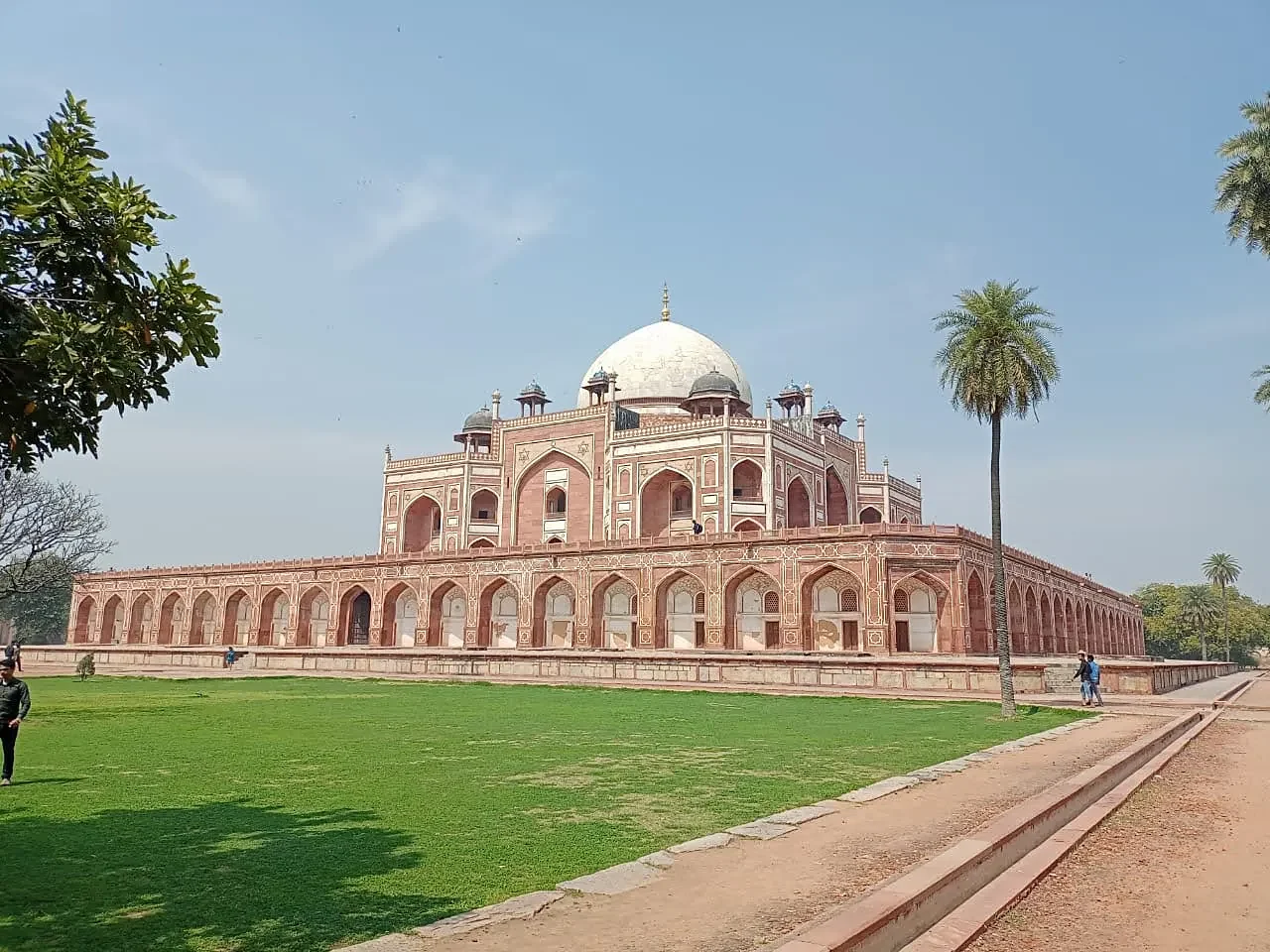
Humoyun maqbarasi - Hindistondagi meʼmoriy yodgorlik (XVI asr 2-yarmi); Dehli shahrida Humoyunning oʻgʻli Akbarshoh tomonidan qurilgan. Maqbara murabba tarhli (47x47 m; umumiy balandligi 37,5 m), qizil qumtosh va oq marmardan bunyod etilgan; 2 qavatli. Pastki qavati (poydevori, balandligi 7 m)ga ravoqlar qatori ishlangan. 2-qavati — asosiy bino 3 qismdan iborat boʻlib, bosh tarzi peshtoq-ravoqli, markaziy xona qoʻsh gumbazli, uning yonidagi doira-koʻshk shaklidagi xonalar tepasiga gumbazli qafasalar ishlangan.
Мавзоле́й Хумаю́на (хинди हुमायूँ का मकबरा, урду ہمایون کا مقبرہ) — усыпальница могольского падишаха Хумаюна в Дели, построенная по заказу его вдовы Беги Бегум, также известной как Хаджи Бегум. Первый династический мавзолей Великих Моголов.
Строительство мавзолея началось в 1562 году и закончилось в 1571 году. В архитектурном отношении представляет собой связующее звено между Гур Эмиром, где погребён Хумаюнов предок Тамерлан, и строившимся по заказу его правнука Шах-Джахана мавзолеем Тадж-Махал.
Humayun's tomb (Persian: Maqbara-i Humayun) is the tomb of the Mughal Emperor Humayun located in Delhi, India. The tomb was commissioned by Humayun's first wife and chief consort, Empress Bega Begum, under her patronage in 1558, and designed by the Persian architects Mirak Mirza Ghiyas and his son, Sayyid Muhammad, whom she personally chose. It was the first garden-tomb on the Indian subcontinent, and is located in Nizamuddin East, Delhi, close to the Dina-panah Citadel, also known as Purana Qila (Old Fort), that Humayun founded in 1538. It was also the first structure to use red sandstone at such a scale.
Das Humayun-Mausoleum in Delhi, Indien, ist der Grabbau von Nasiruddin Muhammad Humayun (1508–1556), dem nach Babur zweiten Herrscher des Großmogulreiches von Indien; er regierte von 1530 bis 1540 und nochmals von 1555 bis 1556. Seit dem Jahr 1993 ist der Baukomplex als Weltkulturerbestätte der UNESCO anerkannt.
La tombe de Humâyûn (en ourdou : ہمایوں کا مقبرہ Humayun ka Maqbara ; en hindi हुमायूँ का मकबरा) est un complexe d'architecture moghole à Delhi en Inde.
La tumba de Humayun es un complejo de edificios de arquitectura mogol en la ciudad india de Delhi. Comprende la tumba principal del emperador Humayun, así como otras tumbas, mezquitas y otras construcciones. El complejo está considerado por la Unesco como Patrimonio de la Humanidad desde el año 1993, ya que es una de las primeras muestras del arte arquitectónico mogol. Es, además, uno de los complejos que mejor se han conservado.
Hümayun Türbesi Babür İmparatoru Hümâyun Şah'ın ölümünden 9 yıl sonra, Babür İmparatorluğu'nun ikinci hükümdarı olan Hümayun'un eşi Bega Begüm'ün (Hacı Begüm) talimatıyla 1565 yılında inşasına başlanıp, 1572 yılında tamamlanmıştır. 1993 yılında da Unesco Dünya Mirası Listesi'ne alınmıştır.
Hümayun Türbesinin mimarı İranlı Mirek Mirza Giyas'tır. Hindistan'da yapılan ilk bahçeli türbe özelliğine de sahiptir.
胡馬雍陵建於1570年,位於印度首都新德里的東南郊亞穆納河畔。此陵是蒙兀兒帝國創始人巴卑爾之子,帝国第二代君主胡馬雍及其皇妃的陵墓。胡馬雍陵是伊斯蘭教與印度教建筑風格的典型結合,並為印度第一座花園陵寢,著名的泰姬陵也是以此為範本所建。1993年被聯合國教科文組織第十七次會議列入世界文化遺產。
Manba: Vikipediya – “Humoyun maqbarasi” · CC BY-SA 4.0
Boshqa tillarda o‘qish: · · · · · · ·