Bu matn hozircha boshqa tilda mavjud.
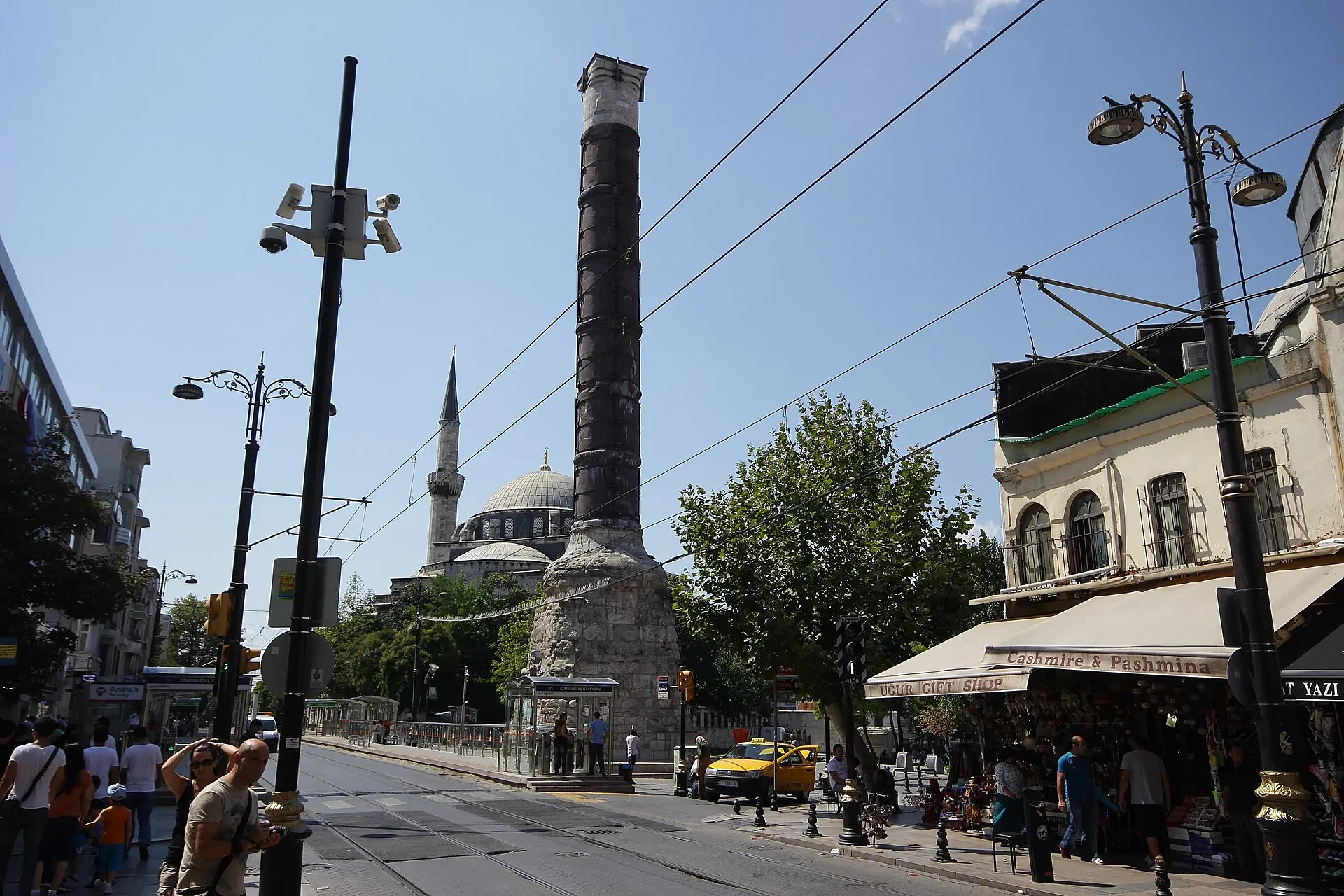
The Column of Constantine (Turkish: Çemberlitaş Sütunu; Greek: Στήλη του Κωνσταντίνου Α΄; Latin: Columna Constantini) is a monumental column commemorating the dedication of Constantinople by Roman emperor Constantine the Great on 11 May 330 AD. Completed c. 328 AD, it is the oldest Constantinian monument to survive in Istanbul. The column stood in the centre of the Forum of Constantine, on the second-highest of the seven hills of Nova Roma, and was midway along the Mese odos, the ancient city's main thoroughfare.
Ottoman repairs in c. 1515 added iron reinforcing hoops to the shaft. The column was consequently given the Turkish name Çemberlitaş (from çemberli 'hooped' and taş 'stone'), which also came to refer to the surrounding area.
Колонна Константина (тур. Çemberlitaş Sütunu — «опоясанная колонна») — римская триумфальная колонна, расположенная на площади Чемберлиташ в Стамбуле, Турция. Установлена в 328 году на форуме Константина и торжественно открыта в день основания Константинополя в 330 году. Высота — 34.8 м, материал — порфир.
Die Konstantinssäule (türkisch Çemberlitaş, von çemberli ‚beringt/bereift‘ und taş ‚Stein‘) ist eine spätrömische Monumentalsäule in Istanbul. Sie stand ursprünglich auf dem Konstantinsforum und prägte in ihrer ursprünglichen Größe das Stadtbild Konstantinopels. Heute ist sie nur noch in Teilen erhalten, muss aber als eines der wenigen überlebenden Denkmäler aus der Gründungszeit Konstantinopels gesehen werden. Die Säule befindet sich in der Yeniçeriler Caddesi in der Altstadt Istanbuls, die der Mese, der früheren Hauptstraße von Konstantinopel entspricht.
La colonne de Constantin (en turc : Çemberlitaş sütunu, signifiant « colonne cerclée», de çember, « cercle », taş, « pierre » et sütun, « colonne »), aussi appelée « colonne de porphyre » (à cause de son matériau) ou « colonne brûlée » (en raison de l’incendie qui y laissa des traces de fumée en 1779) est une colonne commémorative érigée en 328 sur ordre de l’empereur Constantin Ier. Elle est formée de fûts de marbre de porphyre reliés entre eux par des cercles de métal. Elle commémore la fondation de Constantinople comme « Nouvelle Rome » et capitale de l’Empire romain. Sur la colonne se trouvait à l’origine une statue de Constantin le Grand représenté comme le dieu soleil (Sol invictus) ; après que la statue eut été renversée lors d’une tempête en 1106, elle fut remplacée sous l’empereur Manuel Ier par un bloc supportant une croix.
La Columna de Constantino (en turco Çemberlitaş Sütunu ‘columna reforzada’) es una columna conmemorativa construida por orden del emperador Constantino I el Grande en el año 330. Conmemora la declaración de Bizancio, renombrada por Constantino como Nueva Roma, como la nueva capital del imperio romano. Está situada en Yeniçeriler Caddesi, entre el Sultanahmet y la plaza Beyazıt, que durante la época romana era el Foro del Toro.
Çemberlitaş Sütunu ya da diğer adlarıyla Yanık Sütun veya Konstantin Sütunu (Yunanca: Στήλη του Κωνσταντίνου, romanize: Stíli tou Konstandínou), 330 yıllarında İmparator I. Konstantin onuruna, İstanbul'un yedi tepesinden biri olan ve şu anki adıyla Çemberlitaş olarak adlandırılan semtteki tepeye dikilmiş olan anıtsal sütun.
Sütun her biri 3 ton ağırlığında ve 3 metre çapında olan bileziklerle birbirine bağlanmış toplam 8 adet sütun ve bir kaidenin üst üste konulmasıyla oluşturulmuştur.
君士坦丁纪念柱,又名被烧之柱(土耳其语:Çemberlitaş sütunu)是一个罗马纪念柱,由罗马帝国皇帝君士坦丁大帝下令修建于330年,用来纪念拜占庭改名新罗马(Nova Roma),作为罗马帝国的新首都。君士坦丁纪念柱位于伊斯坦布尔老城中心的亲兵街(Yeniçeriler Caddesi),沿着古老的帝国议会路(Divan Yolu),介于苏丹艾哈迈德广场(Sultanahmet,原名君士坦丁堡赛马场)和巴耶济德广场(在罗马时期称为狄奥多西广场)之间。
Manba: Vikipediya – “Column of Constantine” · CC BY-SA 4.0
Boshqa tillarda o‘qish: · · · · · ·