Bu matn hozircha boshqa tilda mavjud.
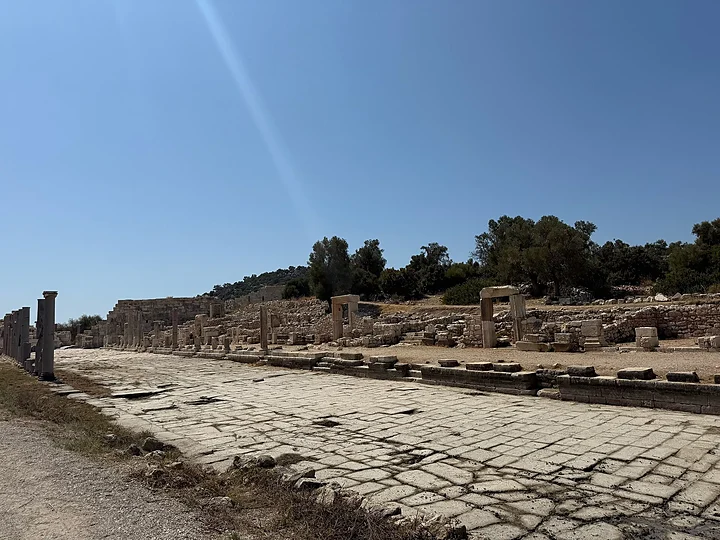
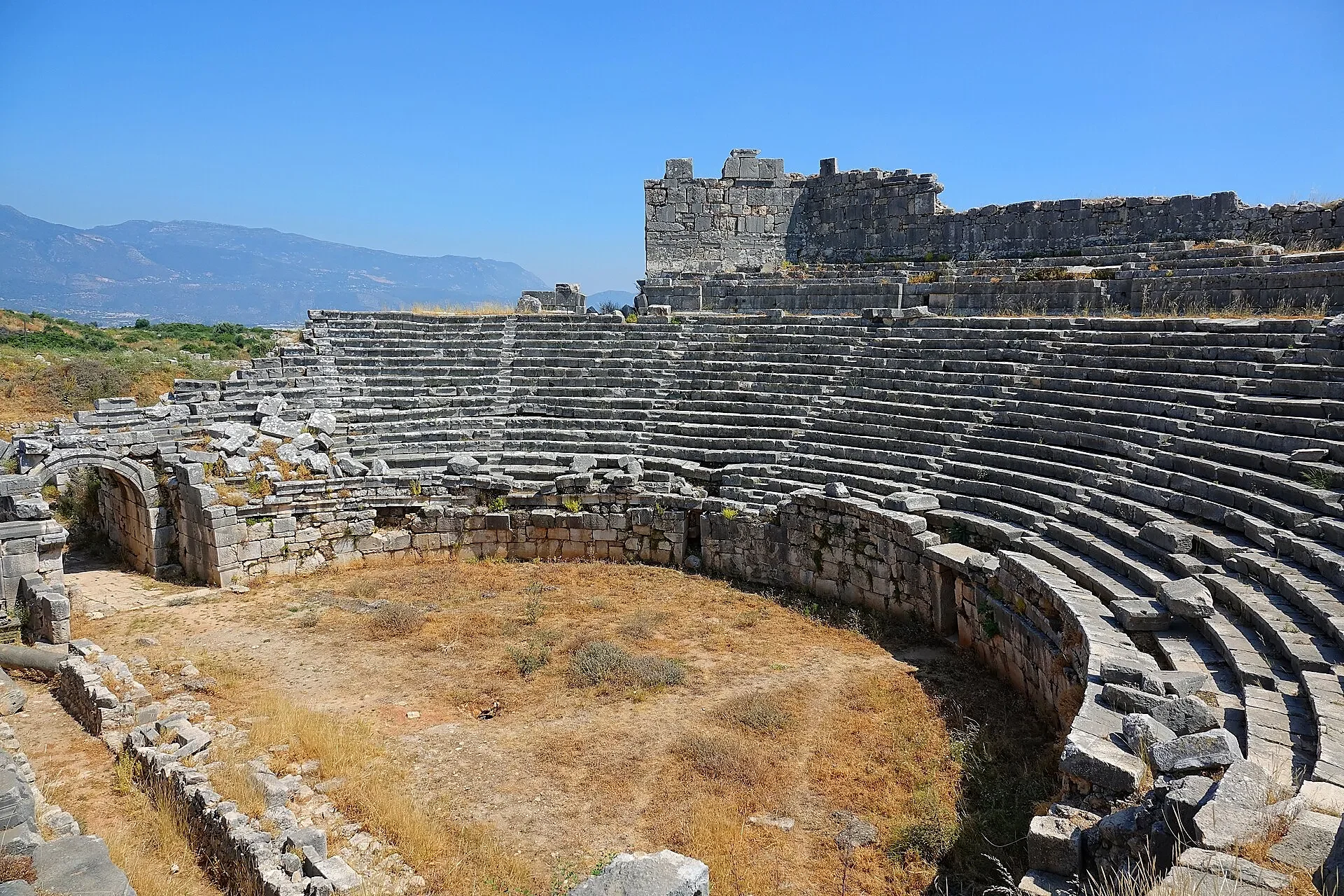
Xanthos or Xanthus, also referred to by scholars as Arna, its Lycian name, (Turkish: Ksantos, Lycian: 𐊀𐊕𐊑𐊏𐊀 Arñna, Greek: Ξάνθος, Latin: Xanthus) was an ancient city near the present-day village of Kınık, in Antalya Province, Turkey. The ruins are located on a hill on the left bank of the River Xanthos. The number and quality of the surviving tombs at Xanthos are a notable feature of the site, which, together with nearby Letoon, was declared to be a UNESCO World Heritage Site in 1988.
The city of Xanthos was a centre of culture and commerce for the Lycians, and later for the Persians, Greeks and Romans who in turn conquered the region. Xanthos influenced its neighbours architecturally; the Nereid Monument directly inspired the Mausoleum at Halicarnassus in the region of Caria.
Ксанф (или Ксант, ликийск.: 𐊀𐊕𐊑𐊏𐊀 Arñna, др.-греч. Ξάνθος, лат. Xanthus, тур. Ksantos) — крупнейший город античной Ликии. Вместе со святилищем Летоон включён в список всемирного наследия ЮНЕСКО. Руины города расположены на территории турецкой провинции Анталья.
Изначально, название города на ликийском языке звучало как Арна. После завоевательных походов Александра Македонского, в результате эллинизации, название трансформировалось в Ксанф.
Die antike Stadt Xanthos (griechisch Ξάνθος (f. sg.)) und der zugehörige Tempelbezirk Letoon stehen als Hauptstadt und Bundesheiligtum des Lykischen Bundes im Mittelpunkt der Geschichte Lykiens (Kleinasien). Neben bedeutenden Resten von Tempeln und städtischen Bauten steht Xanthos für eine Reihe einzigartiger lykischer Denkmäler, deren Grabbauten, Pfeilergräber und Sarkophage reich mit Reliefs und Skulpturen geschmückt sind. Xanthos und Letoon liegen rund 40 km südöstlich von Fethiye im Landkreis Kaş der Provinz Antalya und gehören seit 1988 zum Weltkulturerbe (Welterbe der UNESCO).
Xanthe ou Xanthos (en grec ancien Ξάνθος / Xánthos, en lycien Arñna) est une ancienne cité-État grecque de Lycie qui domine le fleuve du même nom (aujourd'hui Eşen Çayı). Elle est célèbre pour ses monuments funéraires et son pilier inscrit bilingue grec-lycien. Le site archéologique figure depuis 1988 sur la liste du patrimoine mondial de l'UNESCO. Un certain nombre de ses monuments et de ses sculptures se trouvent également au British Museum, à Londres où ils ont été ramenés par Charles Fellows.
Janto (en licio: 𐊀𐊕𐊑𐊏𐊀 Arñna; en griego: Ξάνθος Xánthos) fue una antigua ciudad de Licia, la actual Kınık, en la Provincia de Antalya, en Turquía, y fue también el nombre del río junto al que la ciudad estaba situada, hoy llamado río Eşen. En las primeras fuentes, Janto designaba a toda Licia.
Está en la lista del Patrimonio de la Humanidad de la Unesco desde el año 1988.
Ksanthos veya Ksantos (Likçe: 𐊀𐊕𐊑𐊏𐊀, Arñna; Yunanca: Ξάνθος, Ksanthos), Kaş'ın Kınık köyündeki antik kent. Kaş kara yoluna 70 km uzaklıkta bulunmaktadır. Antik Çağda Likya'ya başkentlik yapmıştır. UNESCO tarafından ’Dünya Kültür Mirası’ listesine alınmıştır. Kentin isminin "sarı" anlamındaki Yunanca ξᾰνθός (ksănthós) kelimesinden geldiği düşünülmektedir.
桑索斯(吕基亚语:Arñna;希腊语:Ξάνθος;拉丁语:Xanthus;土耳其语:Ksantos),是古代吕基亚的一个城市,遗址位于今土耳其安塔利亚省的奇尼克。当地的葬殡艺术遗址非常有代表性,它反映了吕基亚传统与希腊文化影响的交融,很多古老的碑文现在是研究印欧语系以及吕基亚人历史的重要参考。桑索斯同时也是莱克伊亚地区最大的宗教中心和商业中心,这里在罗马时代和拜占庭帝国时代建造了很多非常重要的建筑物。
Manba: Vikipediya – “Xanthos” · CC BY-SA 4.0
Boshqa tillarda o‘qish: · · · · · ·