Bu matn hozircha boshqa tilda mavjud.
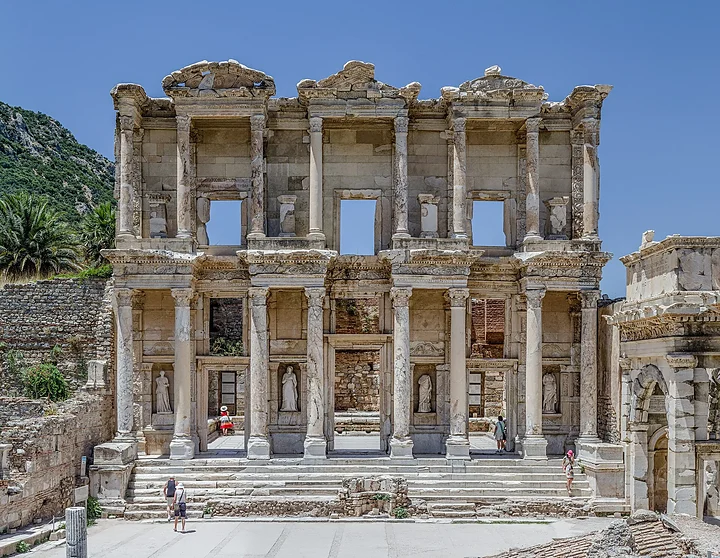
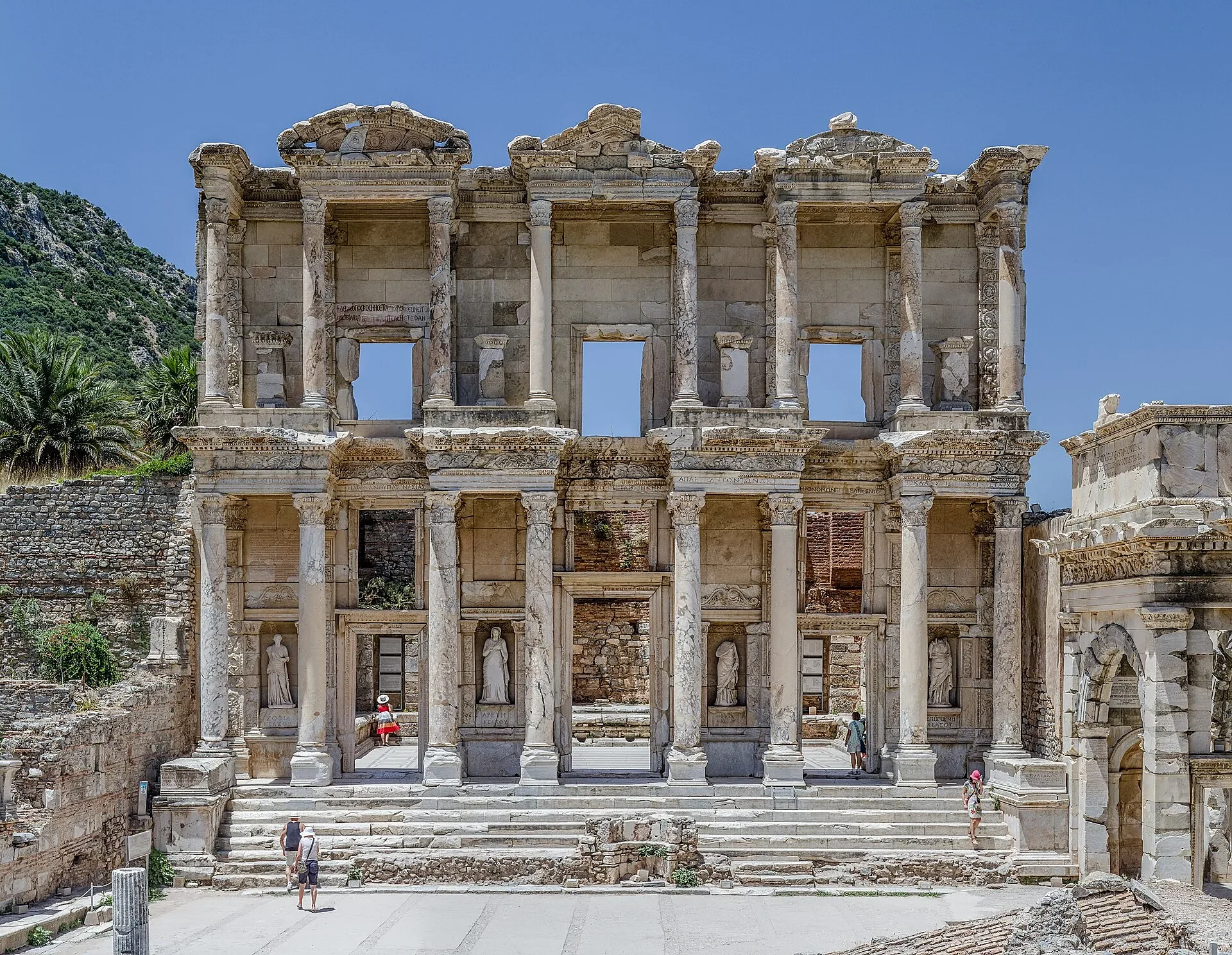
The Library of Celsus (Greek: Βιβλιοθήκη του Κέλσου) is an ancient Roman building in Ephesus, Anatolia, located near the modern town of Selçuk, in the İzmir Province of western Turkey. The building was commissioned in the years 110s CE by a consul of the Roman Empire, Tiberius Julius Aquila Polemaeanus, as a funerary monument for his father Tiberius Julius Celsus Polemaeanus, former proconsul of Asia, and completed during the reign of the Roman Emperor Hadrian, sometime after Aquila's death.
The Library of Celsus is considered an architectural marvel, and is one of the few remaining examples of great libraries of the ancient world located in the Roman Empire. It was the third-largest library in the Greco-Roman world behind only those of Alexandria and Pergamum, and is believed to have held around 12,000 scrolls. Celsus is buried in a crypt beneath the library in a decorated marble sarcophagus. The interior measured roughly 180 square metres (2,000 square feet).
Библиотека Цельса — древнеримская библиотека в Эфесе, построенная во время правления императора Адриана в период с 114 по 135 гг. в честь Тиберия Юлия Цельса (Tiberius Iulius Celsus Polemaeanus) его сыном, Тиберием Юлием Аквилой, консулом 110 года. В библиотеке хранилось почти 12 000 свитков, распределённых по нишам в стенах, на полках и в мебели.
Die Celsus-Bibliothek war eine öffentliche antike Bibliothek römischer Zeit in Ephesos (nahe der heutigen Stadt Selçuk in der Türkei). Ihre Überreste wurden 1903 bei Ausgrabungen entdeckt. Erbaut wurde sie zwischen 117 und 125 durch die Familie des Suffektkonsuls Iulius Celsus, die dem Ritterstand angehörte. Wie lange die Bibliothek in Betrieb war, ist unbekannt. Spätestens im 3. oder 4. Jahrhundert wurde das Gebäude in ein Wohnhaus integriert.
Die Celsus-Bibliothek wurde zu einer Zeit errichtet, als es im Römischen Reich bereits zahlreiche öffentliche Bibliotheken gab. Diese wurden oft von reichen oder einflussreichen Personen gestiftet, so auch die Celsus-Bibliothek, die zugleich als Denkmal und Mausoleum für Iulius Celsus diente. Teile des Gebäudes konnten in den Jahren 1903 bis 1904 freigelegt werden. Der Wiederaufbau der eingestürzten Fassade erfolgte von 1970 bis 1978; er machte die Bibliothek auch über die Fachwelt hinaus bekannt.
Informationen zu Ausstattung, Organisation und Geschichte der Bibliothek sind nur inschriftlich überliefert.
La bibliothèque de Celsus est une bibliothèque publique de l'Antiquité romaine, située à Éphèse (près de l'actuelle ville de Selçuk, en Turquie). Ses vestiges ont été découverts lors de fouilles, en 1903.
La bibliothèque a été construite entre 117 et 125 par la famille du sénateur Tiberius Iulius Celsus Polemaeanus, consul suffect depuis l'an 92, nommé proconsul d'Asie en l'an 105 environ par l'empereur Trajan. La durée de fonctionnement de la bibliothèque est inconnue. Le bâtiment a été intégré à un immeuble d'habitation au plus tard au IIIe ou au IVe siècle.
La bibliothèque de Celsus a été construite à une époque où il existait déjà de nombreuses bibliothèques publiques dans l'Empire romain. Ces établissements étaient souvent offerts par des personnages riches ou influents : ce fut le cas de la bibliothèque de Celsus, également mausolée élevé en l'honneur de cet administrateur.
La Biblioteca de Celso, en Éfeso, Asia Menor (actualmente parte de Turquía), fue un edificio monumental de la época romana construido en el siglo II
La biblioteca albergó en torno a 12 000 rollos y también sirvió como tumba del cónsul romano Tiberio Julio Celso Polemeano. Era poco habitual que alguien se hiciera enterrar en una biblioteca o incluso dentro de los límites de una ciudad, lo cual fue un honor especial para Celso, que está enterrado en una cripta debajo de la biblioteca, en un sarcófago de mármol decorado. Esta biblioteca era la tercera más grande del mundo antiguo, detrás de la de Alejandría y Pérgamo.
Celsus Kütüphanesi, İzmir, Selçuk'a bağlı Efes'te bulunan bir kütüphane kalıntısı. Roma senatörü Gaius Julius Celsus Plemaeanus için vefatından sonra oğlu Galius Julius Aquila tarafından yaptırılmıştır. İnşa edilen kütüphane iki katlıdır. Zamanında 14.000 kadar kitaba ev sahipliği yaptığı düşünülmektedir.
Yapının kalıntıları üzerinde yapılan çalışmalar, ön cephenin iki katlı görünümüne karşın, yapının üç katlı olduğunu göstermektedir. El yazmaları rulolar hâlinde, galerilerden oluşan üst katlarda saklanmıştır. 3. yüzyılda bölgeyi etkileyen depremler sırasında okuma salonu yanmış ancak daha sonra tamir edilmiştir. Ön yüzünün yine Orta Çağ'da yaşanan bir deprem sonucu yıkıldığı sanılmaktadır. Depremde ön cephesi haricinde diğer kısımları yıkıldığından uzunca bir süre sonradan yapılan bir çeşmenin görkemli arka duvarı olarak kullanılmıştır.
塞尔苏斯图书馆(希腊语:Βιβλιοθήκη του Κέλσου)是一座位于今土耳其西部伊兹密尔省塞尔丘克附近,即安纳托利亚以弗所的古罗马建筑。这座建筑物于公元110年代由罗马共和国的执政官提比留斯·尤利乌斯·阿奎拉·波莱米安努斯(Tiberius Julius Aquila Polemaeanus)委托建造,作为他父亲提比留斯·尤利乌斯·塞尔苏斯·波莱米安努斯的纪念碑,后者曾是亚细亚的前资深执政官。这座图书馆在罗马皇帝哈德良统治时期完成,大约是在阿奎拉去世后的某时期落成。
塞尔苏斯图书馆被认为是一个建筑奇迹,是罗马帝国内仅存的希腊-罗马世界古代图书馆建筑的代表性案例。是仅次于亚历山大图书馆和别加摩斯图书馆的第三大图书馆,据信曾收藏大约12,000卷书籍。其中塞尔苏斯则被埋葬在图书馆下方一个装饰著大理石石棺的墓穴。内部面积约为180平方米(2,000平方英尺)。
图书馆内部在公元262年的一次火灾中被摧毁,该火灾可能是由地震或哥特战争引起的。 外立面则于10或11世纪的地震中倒塌。数个世纪以来,它一直是一片废墟,直到1970年至1978年期间,考古学家透过原物归位重新建立了立面。
Manba: Vikipediya – “Library of Celsus” · CC BY-SA 4.0
Boshqa tillarda o‘qish: · · · · · ·