Bu matn hozircha boshqa tilda mavjud.
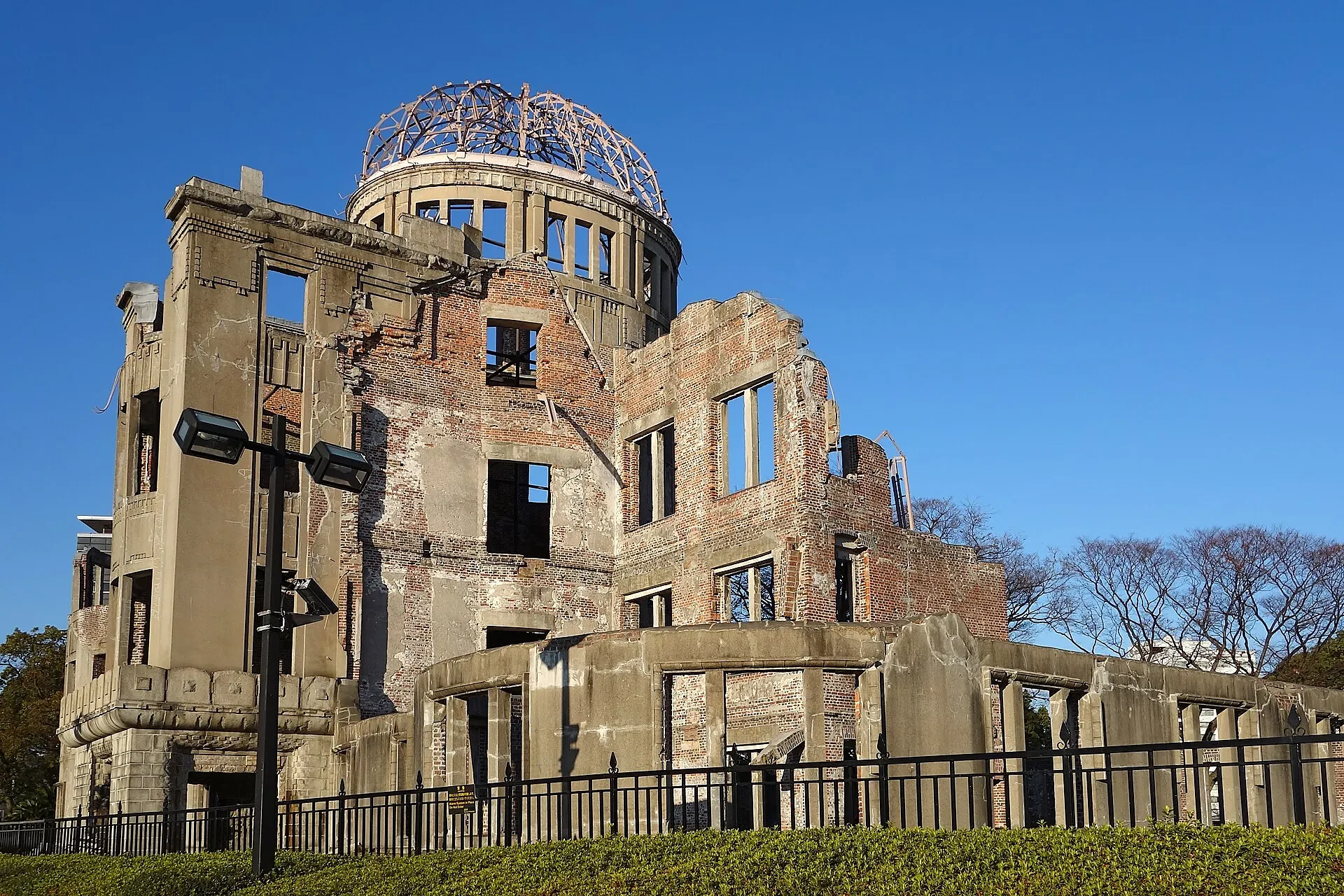
The Hiroshima Peace Memorial (広島平和記念碑, Hiroshima Heiwa Kinenhi), originally the Hiroshima Prefectural Industrial Promotion Hall, and now commonly called the Genbaku Dome, Atomic Bomb Dome or A-Bomb Dome (原爆ドーム, Genbaku Dōmu), is part of Hiroshima Peace Memorial Park in Hiroshima, Japan, and was designated a UNESCO World Heritage Site in 1996.
The building is a prominent structure that remained standing in the area around the atomic bombing of Hiroshima on 6 August 1945, three days before the atomic bombing of Nagasaki and nine days before Japan surrendered, ending World War II. The ruin serves as a memorial to the over 140,000 people killed in the bombing. It is permanently kept in a state of preserved ruin as a reminder of the destructive effects of nuclear warfare.
Купол Гэмбаку (яп. 原爆ドーム Гэмбаку до:му, «Купол атомного взрыва», «Атомный купол») — до Второй мировой войны являлся Выставочным центром торгово-промышленной палаты Хиросимы (англ. Hiroshima Prefecture Industrial Promotion Hall).
Das Friedensdenkmal in Hiroshima (jap. 広島平和記念碑, Hiroshima heiwa kinenhi), auch Atombombenkuppel (原爆ドーム gembaku dōmu, engl. Atomic Bomb Dome, oft fälschlicherweise mit Atombombendom wiedergegeben) ist eine Gedenkstätte für den ersten kriegerischen Einsatz einer Atombombe. Es befindet sich im Friedenspark von Hiroshima.
Le dôme de Genbaku ou dôme de la bombe atomique (原爆ドーム, Genbaku dōmu), aussi appelé mémorial de la paix de Hiroshima (広島平和記念碑, Hiroshima Heiwa Kinenhi), est un bâtiment construit à Hiroshima en 1915 pour servir de palais d'exposition industrielle de la préfecture de Hiroshima, et qui est l'un des rares bâtiments à ne pas s'être effondrés lors de l'explosion de la bombe atomique le 6 août 1945. Il est conservé à l'identique depuis, et est devenu un mémorial pour la paix et l'abolition des armes nucléaires. Son nom provient du terme japonais « genbaku » (原爆), abréviation du terme « genshibakudan » (原子爆弾) signifiant « bombe atomique ».
La Conmemoración de la Paz de Hiroshima o Memorial de la Paz de Hiroshima, llamada también Cúpula Genbaku (原爆ドーム, Genbaku Dōmu?) o Cúpula de la Bomba Atómica por los japoneses, se encuentra en Hiroshima, Japón.
El edificio fue originalmente proyectado por el arquitecto checo Jan Letzel para la Exposición Comercial de la Prefectura de Hiroshima (HMI). Fue terminado en abril de 1915 e inaugurado oficialmente en agosto de ese año. Es una construcción de ladrillo y hormigón con una cúpula de estructura de acero.
Japonya'nın Hiroşima kentinde bulunan ve Atom Bombası Kubbesi (Japonca: 原爆ドーム, Genbaku Dōmu) olarak da bilinen Hiroşima Barış Anıtı, Hiroşima Barış Anıtı Parkı'nın bölümlerinden biridir. 1996'dan bu yana UNESCO Dünya Mirası Alanlarıdan biri olan yapı, Hiroşima'ya atom bombası saldırısı sonucunda ölen kişilerin anıldığı başlıca yerlerdendir.
原爆圓頂館(日語:原爆ドーム/げんばくドーム,又称广岛和平纪念碑(日語:広島平和記念碑/ひろしまへいわきねんひ),是位於日本廣島縣廣島市、元安川河畔的被爆建築遺址。1945年8月6日,美軍以原子彈轟炸廣島,爆炸中心附近的建築物幾乎全數被夷為平地,僅此建築勉強屹立沒有完全傾倒。
今日的原爆圓頂被作為該起事件的紀念物而獲得永久保存,以提醒人們核戰的破壞性影響,該建築是廣島原子彈爆炸週邊地區仍矗立的建築之一,屬广岛和平纪念公园的一部份。1996年联合国教科文组织将此列為世界遗产。
Manba: Vikipediya – “Hiroshima Peace Memorial” · CC BY-SA 4.0
Boshqa tillarda o‘qish: · · · · · ·