Bu matn hozircha boshqa tilda mavjud.
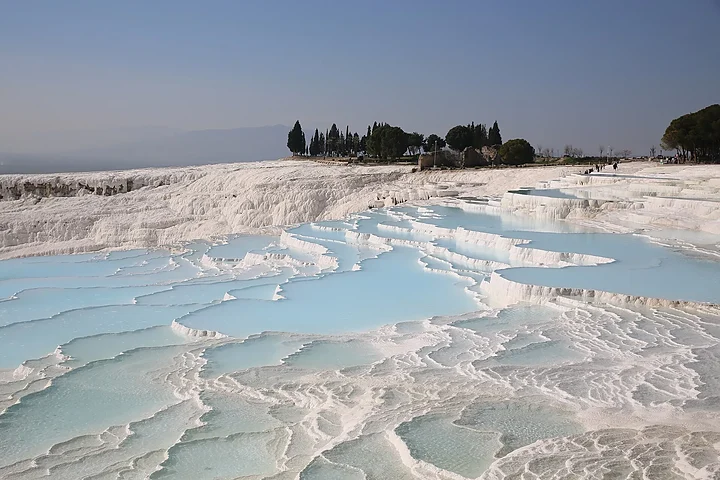
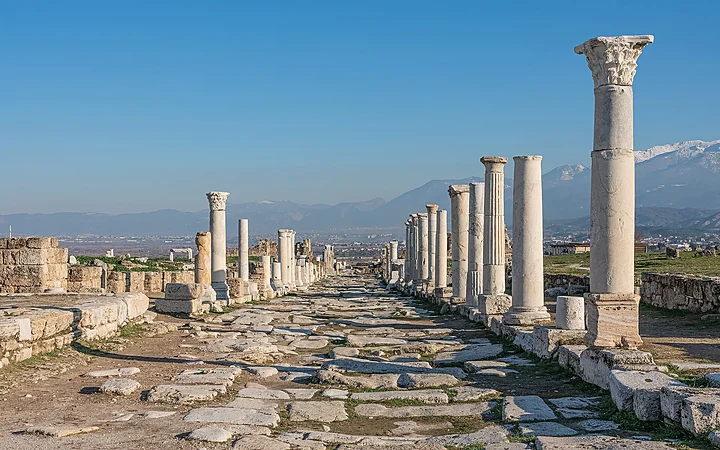
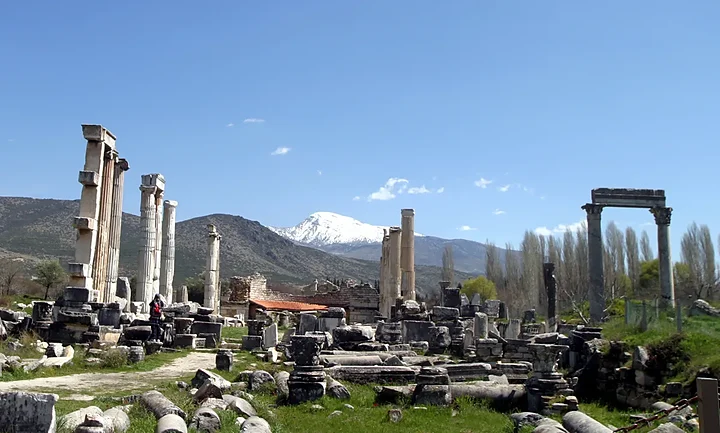
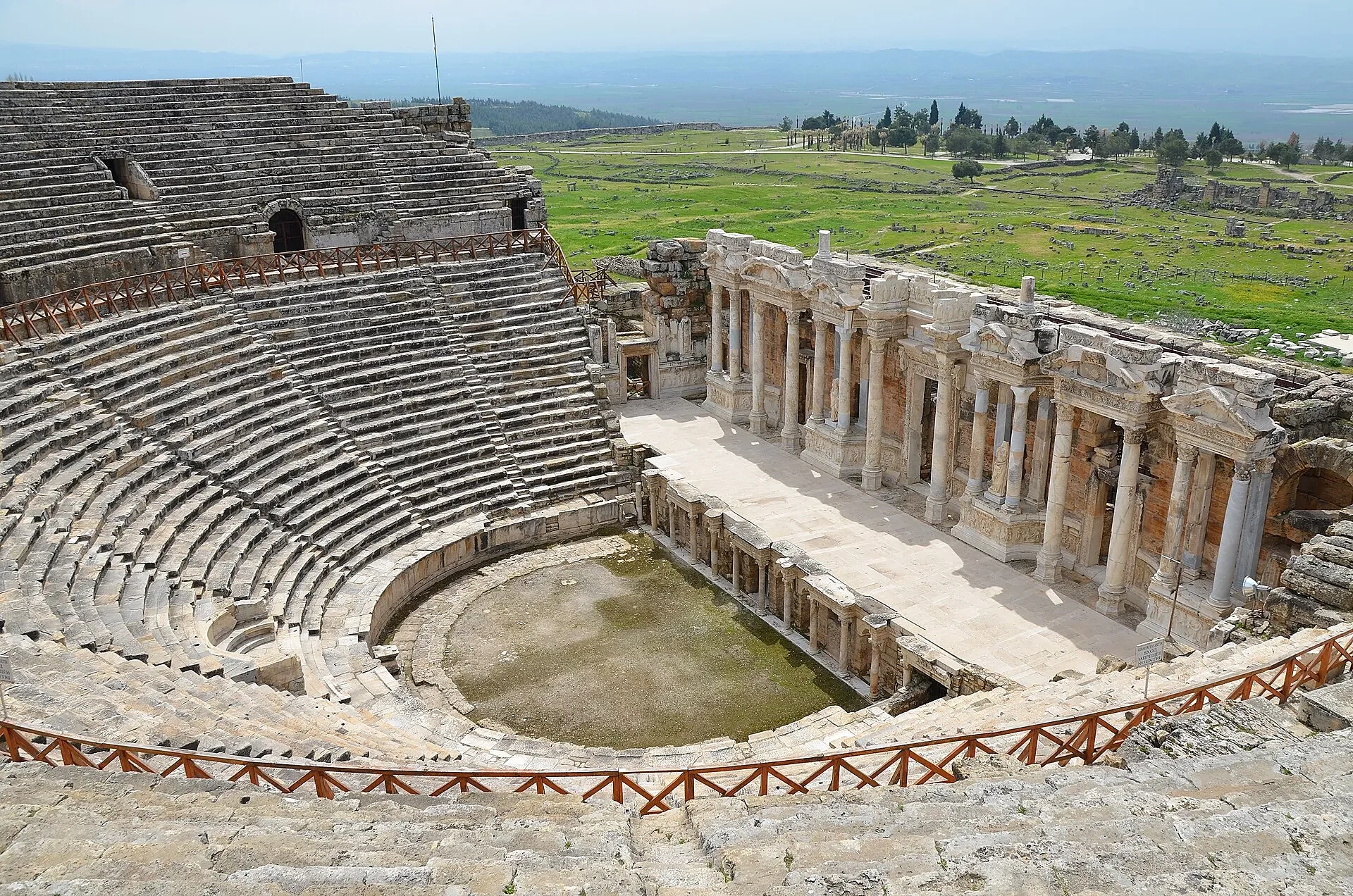
Hierapolis (; Ancient Greek: Ἱεράπολις, lit. "Holy City") was a Hellenistic Greek city in Phrygia, in southwestern Anatolia, Turkey. It was founded in the 3rd century BC, on the site of a Phrygian cult center of the Anatolian mother goddess Cybele, It was famous for its hot springs, its high quality wool fabrics and dyes, and as the birthplace of the Stoic philosopher Epictetus. Its extensive remains are adjacent to modern Pamukkale in Turkey.
The hot springs have been used as a spa since at least the 2nd century BCE, with many patrons retiring or dying there as evidenced by the large necropolis filled with tombs, most famously that of Marcus Aurelius Ammianos, which bears a relief depicting the earliest known example of a crank and rod mechanism, and the Tomb of Philip the Apostle.
Hierapolis was added as a UNESCO World Heritage Site in 1988. The Italian Archaeological Mission of Hierapolis of Phrygia (MAIER) has operated at the site since 1957 and is currently directed by Grazia Semeraro, Professor of Classical Archaeology at the University of Salento.
Иераполь, также Иераполис или Гиераполис (Ἱεράπολις, в переводе с др.-греч. — «священный город», тур. Hierapolis) — античный город, развалины которого находятся в 17 км от турецкого города Денизли. Современное название местонахождения Иераполиса — Памуккале. Важный центр туризма Турции.
Hierapolis (altgriechisch Ἱεράπολις „Heilige Stadt“, gelegentlich auch Hieropolis) war eine antike griechische Stadt in der Landschaft Phrygien in Kleinasien (heute Türkei, am Berg oberhalb von Pamukkale), gelegen am Rand des Lykos-Tals an der Straße im Hermos-Tal von Sardeis nach Apameia in Phrygien. Der Ort war schon im Altertum für die warmen Quellen berühmt, deren Wasser unterhalb der Stadt die weißen Kalksinterterrassen von Pamukkale entstehen ließ. Das Wasser diente zur Färbung von Wolle: Weberei und Textilhandel bildeten die Grundlagen des Reichtums der Stadt.
Hiérapolis (en grec ancien Ἱεράπολις / Hierápolis « ville sacrée ») ou Hiérapolis de Phrygie est une station thermale créée vers la fin du IIe siècle av. J.-C. par la dynastie des Attalides. Elle est située au sommet de la colline de Pamukkale, bien connue pour ses sources chaudes et ses concrétions calcaires, à 15 km de la ville de Denizli en Turquie. La cité antique de Hiérapolis atteste le rayonnement de la présence hellénistique, puis romaine (du IIe siècle av. J.-C. au IVe siècle ap. J.-C.) en Asie Mineure. Elle est inscrite en 1988, conjointement avec Pamukkale, sur la liste du patrimoine mondial de l'Unesco.
Hierápolis (Ιεραπολις - ciudad sagrada) fue una antigua ciudad helenística construida en un lugar de culto frigio dedicado a la diosa madre anatolia Cibeles, en Frigia, Asia Menor, ubicada en la actual Pamukkale, provincia de Denizli, Turquía. Célebre por sus aguas termales, fabricación de lana y tintes, así como lugar de nacimiento del filósofo estoico Epícteto.
Las aguas termales se han usado como balneario desde al menos el siglo II a. C., con muchos patronos que se retiraban o fallecían allí, tal y como evidencia una gran necrópolis con tumbas, como la de Marcus Aurelius Ammianos, que muestra uno de los primeros relieves de manivela y biela, y la tumba de Felipe el Apóstol.
La Unesco la declaró Patrimonio de la Humanidad en 1988. La Misión Arqueológica Italiana de Hierápolis de Frigia (MAIER) ha trabajado en el yacimiento desde 1957.
Hierapolis (Yunanca: Ἱεράπολις 'kutsal şehir'), Pamukkale (Denizli) yakınlarında bulunan ve Frigler döneminde ana tanrıça Kibele kültünün merkezlerinden biri olarak faaliyet göstermiş bir antik kenttir. Antik coğrafyacı Strabon ile Ptolemaios verdikleri bilgilerde, Karia bölgesine sınır olan Laodikya ve Tripolis kentlerine yakınlığı ile Hierapolisin bir Frigya kenti olduğunu ileri sürülmektedir.
希拉波利斯(土耳其语:Hierapolis,希腊语:Ἱεράπολις )意即“圣城”。是温泉顶部的古希腊城市,位于土耳其西南部,靠近代尼兹利。
希拉波利斯和棉花堡是一处联合国教科文组织世界遗产。这里的温泉自从公元前二世纪就用于疗养,人们来此治疗他们的疾病,其中许多人,退休或死在这里。庞大的墓地充满了石棺,其中包括马可·奥勒留石棺。水车也是此地一景。
大浴池用巨大的石块建造,没有使用水泥,由各个开放或封闭的组成部分连接在一起。浴室的内部有深壁龛,是图书馆,体育馆等封闭或开放的空间。这个建筑群建于公元前2世纪,构成了拱顶式建筑的典范。这个建筑群现在是一个考古博物馆。
Manba: Vikipediya – “Hierapolis” · CC BY-SA 4.0
Boshqa tillarda o‘qish: · · · · · ·