Bu matn hozircha boshqa tilda mavjud.
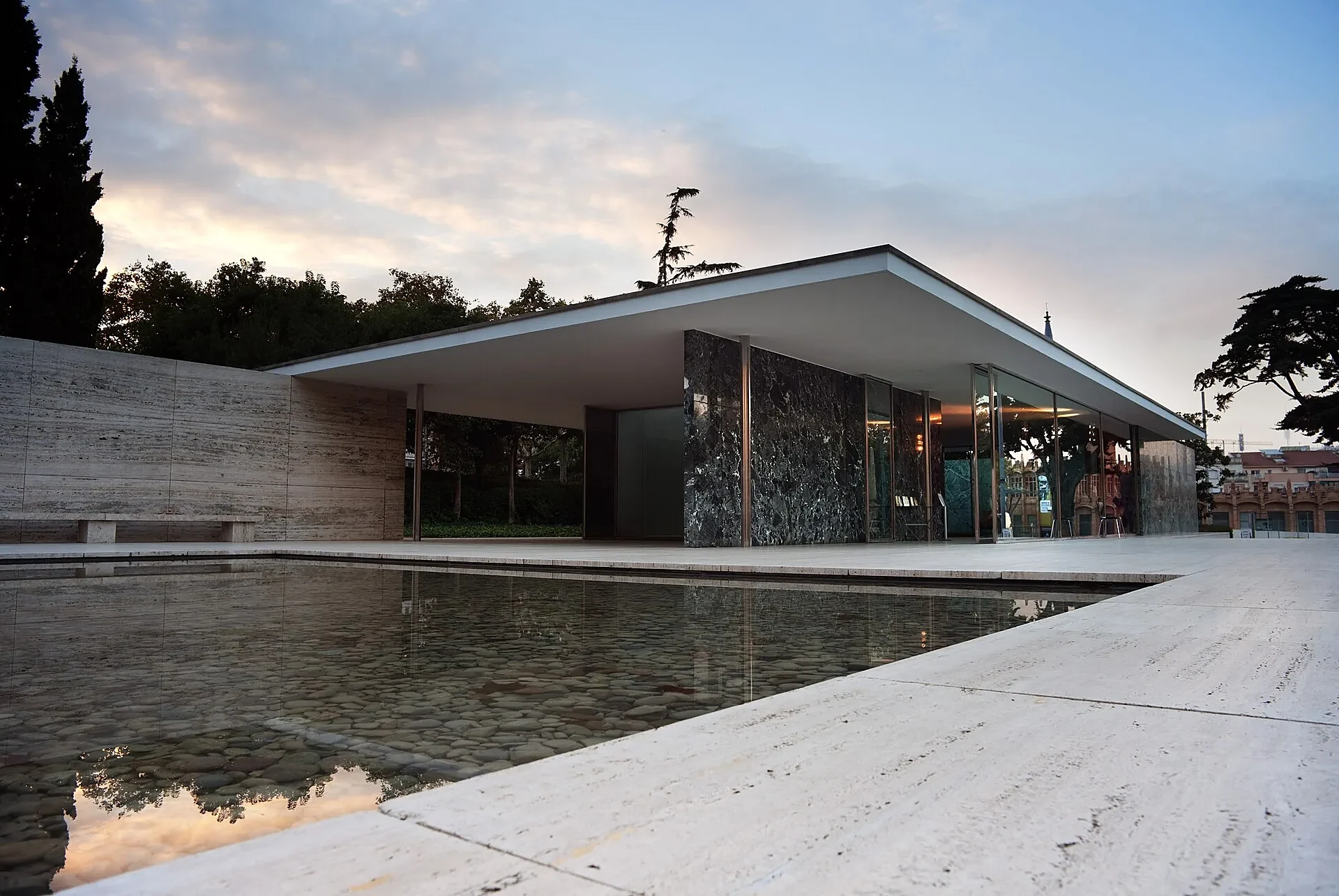
The Barcelona Pavilion (Catalan: Pavelló alemany; Spanish: Pabellón alemán; "German Pavilion") is a structure designed by Ludwig Mies van der Rohe and Lilly Reich. It was originally built as the German Pavilion for the 1929 International Exposition in Barcelona, Catalonia, Spain. This building was used for the official opening of the German section of the exhibition. It is an important building in the history of modern architecture, known for its simple form and its use of expensive materials, such as marble, red onyx, and travertine. The original structure was demolished in 1930, and it was reconstructed in 1986. Furnishings specifically designed for the building, including the Barcelona chair, are still in production, and the structure has inspired many important modernist buildings.
Павильон Германии в Барселоне — выставочный павильон Веймарской республики на Всемирной выставке, проходившей в столице Каталонии, Барселоне, с 20 мая 1929 года по 15 января 1930 года. Построен по проекту немецкого архитектора-модерниста Людвига Миса ван дер Роэ.
Als Barcelona-Pavillon (auf Katalanisch Pavelló alemany „Deutscher Pavillon“ bzw. Pavelló Mies van der Rohe) wird der Ausstellungspavillon des Deutschen Reichs auf der Weltausstellung 1929 in Barcelona (Exposició Internacional de Barcelona) bezeichnet, den der deutsche Architekt Ludwig Mies van der Rohe (1886–1969) in Zusammenarbeit mit Lilly Reich (1885–1947) entwarf. Der Deutsche Pavillon diente der Selbstdarstellung der Weimarer Republik und sollte durch seine Neuartigkeit und Präzision die Leistungsfähigkeit der deutschen Industrie und des Handwerks symbolisieren. Nicht zuletzt durch seinen Wiederaufbau wird der Pavillon als eine der Architekturikonen des 20. Jahrhunderts bestätigt. Der Bau gilt als Vorbild für die Weiterentwicklung van der Rohes Idee der „gläsernen Halle“, die er später im Bau der Neuen Nationalgalerie vollendet.
Le Pavillon de Barcelone ou Pavillon allemand ou Pavillon Mies van der Rohe est un pavillon allemand de 1986, des architectes Ludwig Mies van der Rohe et Lilly Reich. Il est reconstitué à l'identique à l'emplacement d'origine de celui de l'Exposition internationale de 1929 de Barcelone, démantelé en 1930. Il est classé Bien culturel d'intérêt national de Catalogne et Bien d'intérêt culturel d'Espagne.
El pabellón de Alemania, diseñado por Ludwig Mies van der Rohe y Lilly Reich, fue el edificio de representación de Alemania en la Exposición internacional de Barcelona celebrada en el año 1929. Concebido como espacio representativo para albergar la recepción oficial presidida por el rey Alfonso XIII a las autoridades alemanas, el edificio pretendía simbolizar el carácter progresista y democrático de la nueva República de Weimar y su recuperación tras la Primera Guerra Mundial.
Este edificio constituye uno de los hitos en la historia de la arquitectura moderna, al ser una obra donde se plasman con particular rotundidad y libertad las ideas del entonces naciente Movimiento Moderno, y está considerado por muchos autores como una de las cuatro piezas canónicas de la arquitectura del movimiento moderno junto con el edificio de la Bauhaus de Gropius, la villa Savoye de Le Corbusier y la Casa de la cascada de Wright.
Barselona Pavyonu veya Alman Pavyonu (İspanyolca: Pavelló alemany; İspanyolca: Pabellón alemán), İspanya'nın Barselona kentinde bulunan bir sergi binasıdır. Ludwig Mies van der Rohe ve Lilly Reich tarafından tasarlanmış olup ilk olarak 1929 Uluslararası Fuarı için Alman Pavyonu olarak inşa edildi ve serginin Alman bölümünün resmi açılışı için kullanıldı. Modern mimarlık tarihinde basit şekli ve mermer, kırmızı oniks ve traverten gibi abartılı malzemelerin muhteşem kullanımı ile bilinen önemli bir yapıdır. Minimalizm ve muhteşemliğin aynı özellikleri, ikonik Barselona sandalyesi de dahil olmak üzere bina için özel olarak tasarlanmış prestijli mobilyalara uygulanmıştır. Pavyon, birçok önemli modernist binaya ilham verdi.
Pavilyon, 1980'lerde yeniden inşa edilerek günümüzdeki yapısına kavuşmuştur.
1929年巴塞罗那世界博览会德国馆,一般简称巴塞罗那德国馆、德国馆(加泰罗尼亚语:Pavelló alemany;西班牙语:Pabellón alemán),位于西班牙巴塞罗那,是密斯·凡德罗设计的1929年世界博览会德国国家馆。它也是世界博览会的德国展区开幕式的举办场所。德国馆因其简单的设计和昂贵的建材(诸如大理石和洞石)而在现代主义建筑史上具有重要意义。1929年间,也曾有多次国际现代艺术展在此举行。
Manba: Vikipediya – “Barcelona Pavilion” · CC BY-SA 4.0
Boshqa tillarda o‘qish: · · · · · ·