
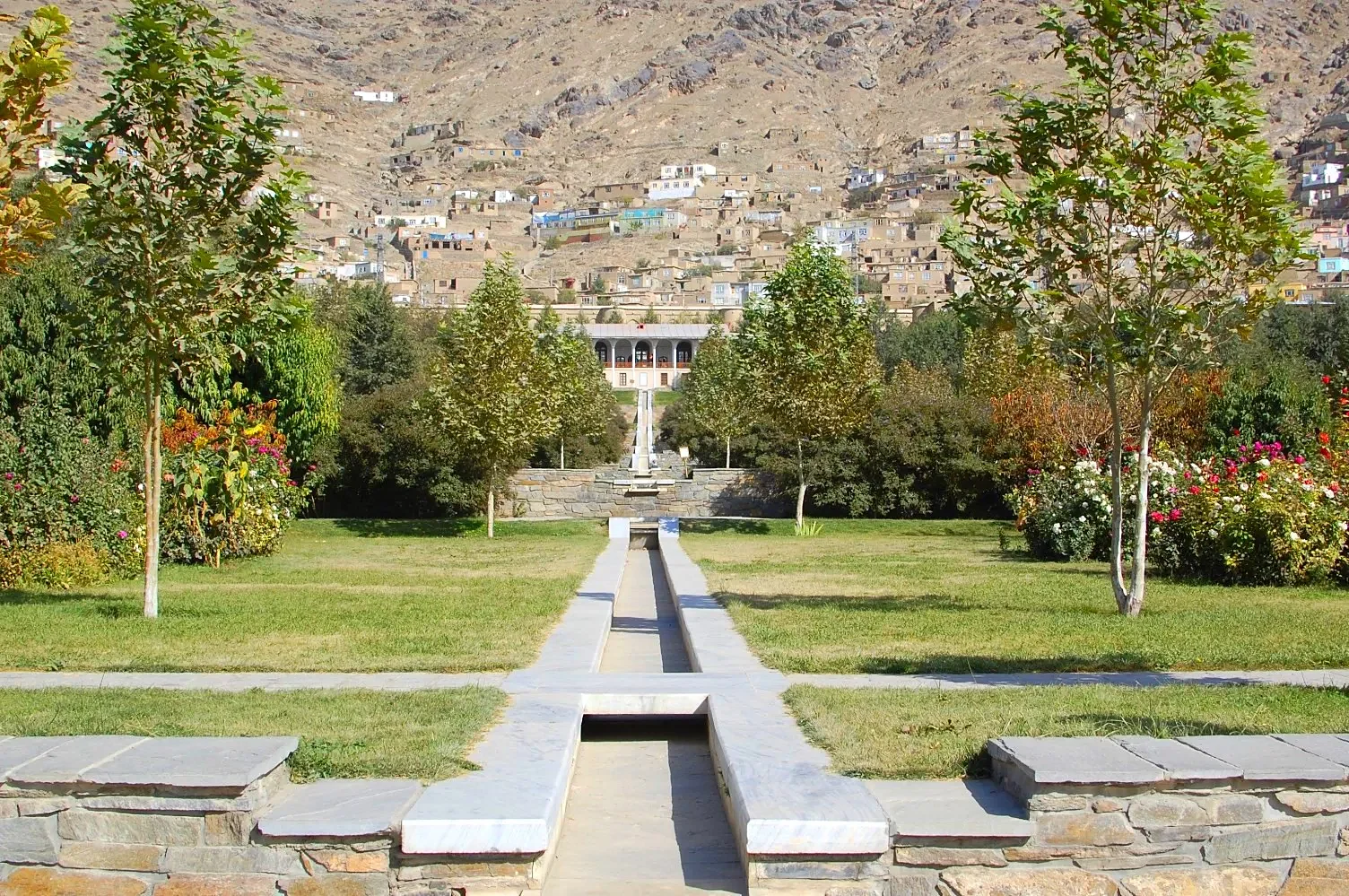
Bogʻi Bobur — Kobul shahrida Bobur barpo etgan bogʻ (1515—20). Bogʻi Bobur shaharning Sherdarvoza tepaligi yon bagʻridagi bir necha ga maydonni egallagan nihoyatda xushmanzara, obod, shahar aholisining oromgoh va ziyoratgoh joyi. Har yili 21-mart (Navroʻz kuni)da koʻchat oʻtqazish marosimi shu bogʻdan boshlanadi. Bogʻda Bobur maqbarasi, uning yonida Boburning kichik oʻgʻli Hindol, nevaralari: Ruqiya Sulton begim, Hakim Mirzo va boshqa avlodlarining qabrlari joylashgan.
Баги-Бабур (пушту باغ بابر, перс. باغ بابر; также встречаются названия сад Бабура и сады Бабура) — парковый комплекс в Афганистане, расположен неподалеку от города Кабула. Назван в честь своего владельца Бабура, основателя империи Великих Моголов. Бабур, помимо этого, увлекался разведением садов.
The Gardens of Babur, is a historic site in District 5 (Nahia 5) of Kabul, Afghanistan. It is located in the Guzargah neighborhood, with the Sher Darwaza mountain being to the east, Chihil Sutun to the south, and the Kabul Zoo to the northwest. The over 500-year-old site has numerous gardens, several terraced buildings, a small mosque, and plenty of walking space. Visited by up to one million locals and foreign tourists a year, it is also where the tombs of the first Mughal emperor Babur and some of his relatives are located.
Der Bagh-e Babur, Garten des Babur (باغ بابر), ist eine Gartenanlage an einem Hügel im Südwesten der Altstadt von Kabul, die 1528 in der Herrschaft des ersten Mogulenherrschers Babur angelegt wurde und als seine Grabstätte diente. Nach seiner Renovierung steht der Garten seit 2009 auf der Kandidatenliste der Weltkulturerbestätten.
Bagh-e Babur, aussi appelé jardins de Babur (باغ بابر en pachto, باغ بابر en persan), est un parc historique situé au sud-est de Kaboul, capitale de l'Afghanistan. C'est un exemple de jardin moghol, l'un des plus anciens étant arrivé jusqu'à nous. Le nom Bagh-e Babur est utilisé aujourd'hui mais son nom historique n'est pas connu.
Bagh-e Babur (en persa: باغ بابر / bāġ-e bābur, en español Jardines de Babur) es un parque histórico ubicado en Kabul, capital de Afganistán, y también el lugar de descanso final del primer emperador mogol Babur. Se cree que el jardín se desarrolló alrededor de 1528 (935 AH) cuando Babur dio órdenes para la construcción de un "jardín de avenida" en Kabul, descrito con cierto detalle en sus memorias, el Baburnama.
Era tradición de los príncipes mogoles construir sitios para la recreación y el placer durante su vida, y elegir uno de ellos como último lugar de descanso. El sitio siguió siendo de importancia para los sucesores de Babur, Jehangir y su madrastra, la emperatriz Ruqaiya Sultan Begum (nieta de Babur), hizo una peregrinación al sitio en 1607 (1016 AH) cuando ordenó que todos los jardines de Kabul estuvieran rodeados por paredes, que se coloque una plataforma de oración frente a la tumba de Babur, y se coloque una lápida con inscripciones en su cabecera.
Manba: Vikipediya – “Bogʻi Bobur” · CC BY-SA 4.0
Boshqa tillarda o‘qish: · · · · ·