Bu matn hozircha boshqa tilda mavjud.
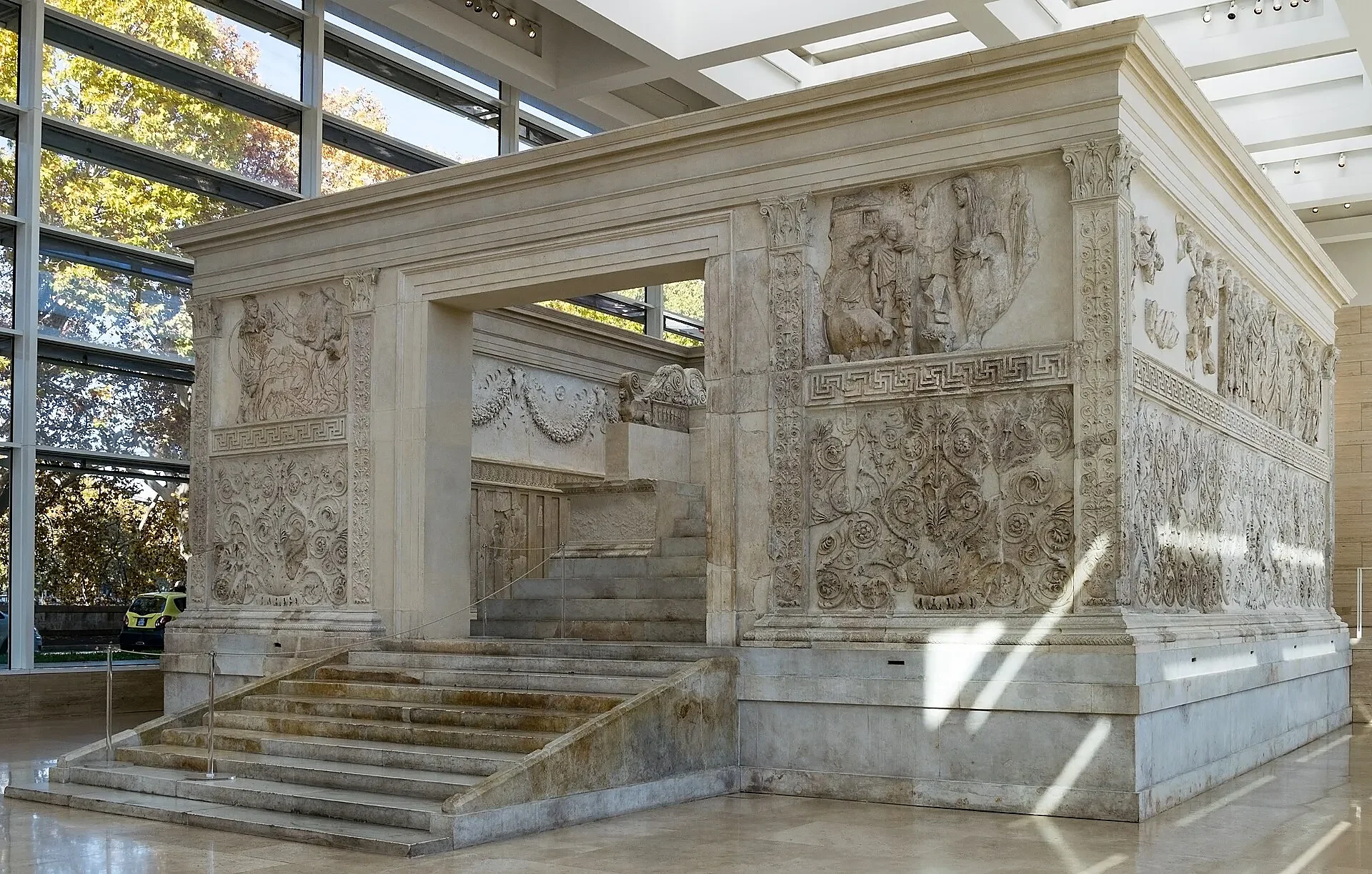
The Ara Pacis Augustae (Latin, "Altar of Augustan Peace"; commonly shortened to Ara Pacis) is an altar in Rome dedicated to the Pax Romana. The monument was commissioned by the Roman Senate on July 4, 13 BC to honour the return of Augustus to Rome after three years in Hispania and Gaul and consecrated on January 30, 9 BC. Originally located on the northern outskirts of Rome, a Roman mile from the boundary of the pomerium on the west side of the Via Flaminia, the Ara Pacis stood in the northeastern corner of the Campus Martius, the former flood plain of the Tiber River and gradually became buried under 4 metres (13 ft) of silt deposits. It was reassembled in its current location, now the Museum of the Ara Pacis, in 1938, turned 90° counterclockwise from its original orientation so that the original western side now faces south.
Алтарь Мира (лат. Ara Pacis Augustae) — алтарь в честь римской богини мира, воздвигнутый римским сенатом в честь триумфального возвращения императора Августа из Испании и Галлии в 13 году до н. э. Был установлен на северной окраине Рима (северо-восточный угол Марсова поля) и освящён сенатом 30 января 9 года до н. э. Освящение алтаря ознаменовало собой наступление эпохи «римского мира» (Pax Romana).
Die Ara Pacis Augustae (lateinisch „Altar des Augusteischen Friedens“ oder „Altar der Friedensgöttin Pax Augusta“) ist ein Monument in Rom. Es wurde 13 v. Chr. vom römischen Senat in Auftrag gegeben und dem siegreichen Kaiser Augustus gewidmet. Es war der erste Versuch, darzustellen, wie ein kaiserliches Friedenskonzept nach jahrelangen Bürgerkriegen und inneren Konflikten aussehen könnte. Seit 1938 wird das Monument durch einen Pavillon vor Umwelteinflüssen geschützt.
L’Ara Pacis (Ara Pacis Augustae, « Autel de la Paix Auguste ») ou Autel de la Paix est un monument de la Rome antique édifié par le premier empereur romain, Auguste, entre 13 et 9 av. J.-C., en l'honneur de Pax, la déesse de la Paix. Le sénat en décida la construction après son retour victorieux de Gaule et d'Espagne. Il se trouve sur la Via Flaminia dans la zone septentrionale du Champ de Mars, dédiée à la célébration des victoires romaines. C'est un lieu symbolique du retour à la paix car c'est là que les soldats et leur commandant, de retour de leur campagne militaire, effectuent les rites qui clôturent leur activité guerrière.
Ara Pacis Augustæ (español: Altar de la Paz Augusta) es un altar y monumento dedicado a la diosa romana Pax erigido por el senado romano para celebrar las victoriosas campañas de Augusto en Galia e Hispania y la paz impuesta luego de su retorno triunfal. Construido entre el año 13 a. C. y el año 9 a. C., su ubicación original era en el lado oeste de la Vía Flaminia en el Campo de Marte, donde cada año se debían sacrificar un carnero y dos bueyes.
Ara Pacis Augustae (Latince, "Görkemli Barışın Sunağı"; bilinen adı Ara Pacis), Roma tanrıçası olarak tahayyül edilen Barış'a adanmış sunak. Sunak, Roma İmparatoru Augustus tarafından (ya da onun için) sipariş edilmiş ve MÖ 30 Ocak 9 tarihinde Augustus'un Galya ve Hispania'daki zaferlerinin ardından tesis edilen barışı kutlamak için Roma Senatosu tarafından kutsanmıştır. MÖ 4 Temmuz 13 tarihinde hizmete girmiştir. Sunak, Roma İmparatorluğu'nun baskın askerî güç olmasıyla elde ettiği Pax Romana'nın sağladığı barış ve refahtan duyulan memnuniyeti resmetmek için yapılmıştır.
和平祭坛(拉丁语:Ara Pacis Augustae)是一个供奉和平女神的祭坛,公元前13年7月4日由罗马元老院修建,以庆祝罗马皇帝奥古斯都从西班牙和高卢凯旋,公元前9年1月30日罗马元老院进行祝圣,以庆祝奥古斯都胜利后为帝国带来的和平。它试图描绘罗马和平时期的和平与繁荣,并提醒人们,这些是因朱里亚·克劳狄王朝带来的罗马帝国的军事优势而有的。
祭坛的形制类似古罗马早期的露天祭坛,而四周的浮雕明显带有古希腊古典时期的雕塑风格。祭坛分上下两部分。下部为装饰性图案,象征着奥古斯都统治下的和平与富饶,上部是叙事性浮雕,包括庆祝祭坛设立的游行场面以及象征性内容。北面的浮雕中有帝国官员和妻儿走向入口的形象,南面的浮雕记录了皇室的成员。
Manba: Vikipediya – “Ara Pacis” · CC BY-SA 4.0
Boshqa tillarda o‘qish: · · · · · ·